 listicle
Best Pressure Washer: A 2026 Guide
Table of Contents
- What Makes the Best Pressure Washer for Your Property
- Electric vs Gas Pressure Washer: Which Type Works Best
- Pressure Washer PSI Requirements for Common Cleaning Tasks
- Top Pressure Washer Models for Residential and Commercial Use
- Pressure Washer Maintenance Tips to Extend Equipment Life
- When to Hire Professional Pressure Washing Services
- Frequently Asked Questions
Last Updated: September 25, 2026
What Makes the Best Pressure Washer for Your Property
Finding the best pressure washer means matching power output to your cleaning needs. The right machine saves time, prevents surface damage, and delivers lasting results.
Pressure washers are measured in PSI (pounds per square inch) and GPM (gallons per minute). PSI indicates cleaning force; GPM measures water flow. The best pressure washer balances both, high PSI alone is slow on large surfaces, while high GPM without adequate PSI won't remove stubborn stains.
Power source matters: electric models are quiet and low-maintenance but require cord access; gas-powered units deliver higher pressure and mobility but demand fuel management; battery-powered options offer cordless convenience with 30-45 minute runtime.
Electric vs Gas Pressure Washer: Which Type Works Best
Electric pressure washers dominate residential cleaning: they start instantly, require minimal maintenance, and operate quietly. Most deliver 1,500-3,200 PSI, suitable for concrete, siding, and light-duty commercial work.
Gas-powered units excel at demanding jobs, delivering sustained high pressure for large driveways, parking lots, and commercial properties. They handle extended runtime and perform reliably in cold weather.
Trade-offs: gas machines are louder and require fuel storage and seasonal maintenance; electric units depend on outlet proximity; battery-powered models offer cordless freedom but limit runtime to 30-45 minutes per charge.
| Power Type | Best For | PSI Range | Noise Level | Maintenance |
|---|---|---|---|---|
| Electric | Residential, light commercial | 1,500-3,200 | Quiet | Minimal |
| Gas-Powered | Heavy-duty, large areas | 2,700-3,200+ | Loud | Regular |
| Battery-Powered | Cordless convenience | 2,500-3,200 | Moderate | Low |
Pressure Washer PSI Requirements for Common Cleaning Tasks
Different surfaces demand different pressure levels. Using too much PSI damages material; too little wastes time. Noise output and storage footprint also significantly impact ownership experience.
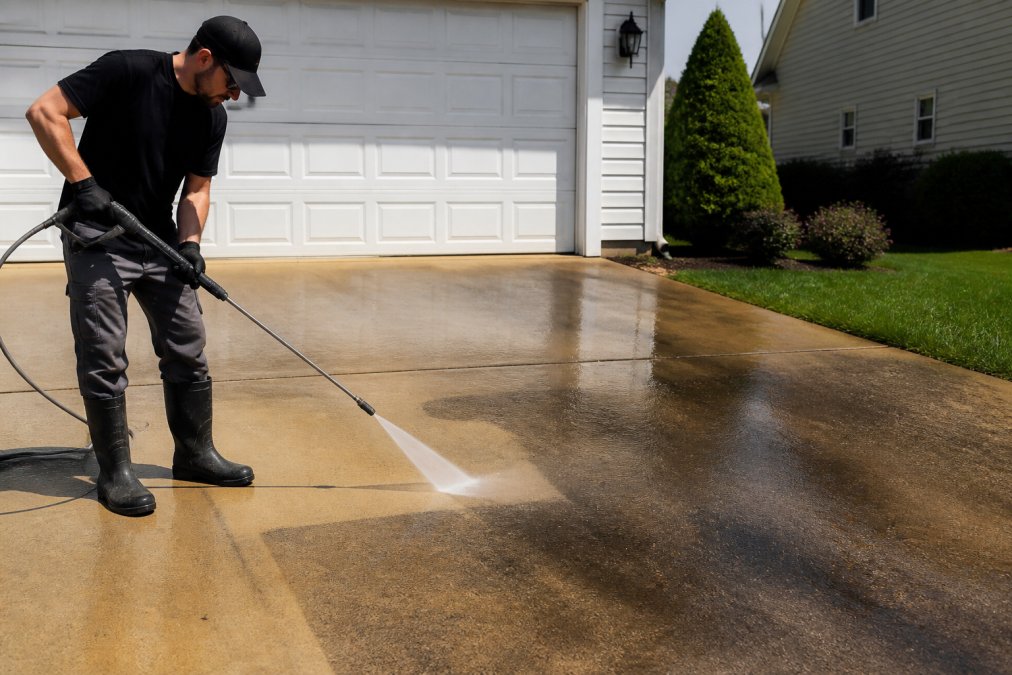
Driveway and concrete: Most driveways need 2,500-3,000 PSI to remove oil stains, mildew, and algae. If your driveway shows existing etching, drop to 2,000 PSI maximum. Test on an inconspicuous corner first; older concrete (pre-1980) is softer and more prone to etching.
Deck restoration: Wood and composite decks require 1,500-2,000 PSI with a 40-degree nozzle minimum. Composite decks are especially sensitive; manufacturers recommend maximum 1,500 PSI to avoid degradation. Professional pressure washing restores appearance without compromising material integrity.
Roof cleaning: Never use standard pressure washing on asphalt shingles. Pressure above 1,500 PSI dislodges granules and voids warranties. Soft-washing (low pressure with chemical treatment) is the only safe method. Insurance typically won't cover damage from improper DIY roof cleaning.
Vehicle detailing: Cars require 1,200-1,500 PSI maximum with a 40-degree nozzle at 12+ inches distance. Higher pressure removes clear coat. Luxury vehicles with ceramic coatings need maximum 1,000 PSI.
Concrete cleaning units and professional-grade performance: Professionals use cleaning units (CU), calculated as PSI × GPM ÷ 100. A 3,000 PSI machine at 2.5 GPM delivers 75 CU (professional-grade); most homeowner machines deliver 15-50 CU, explaining why professional results look dramatically different.
Noise levels and neighborhood impact: Electric models operate at 75-85 decibels (comparable to a lawnmower); gas-powered units range 85-95 decibels (loud enough to disturb neighbors); battery-powered models are quieter at 70-80 decibels. For early morning or evening cleaning, electric or battery models are recommended. Many municipalities have noise ordinances; check local regulations before purchasing a gas-powered unit.
Storage footprint and space constraints: Electric models average 24-30 inches wide and fit easily in a garage corner. Gas-powered units are bulkier (28-36 inches wide) and require fuel storage space. Battery-powered models are most compact (20-24 inches wide), ideal for apartments or limited storage. Measure your storage location before purchasing; a machine that doesn't fit becomes a yard eyesore or requires rental storage.
Top Pressure Washer Models for Residential and Commercial Use
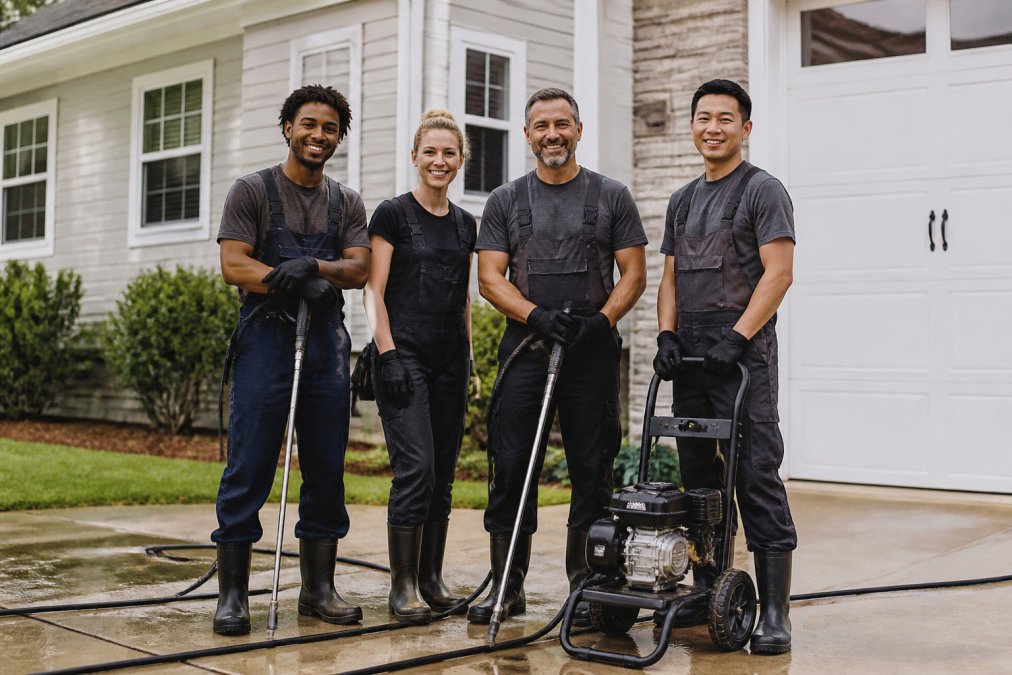
A2Z Wash Pros Professional Service eliminates the guesswork of equipment selection and DIY learning curves. The team specializes in surface-specific techniques, soft-washing roofs, controlled-pressure driveway cleaning, and gentle deck restoration, preventing damage that DIY attempts often cause.
The DeWalt 2600 PSI Electric Jobsite Pressure Washer delivers professional-grade durability for DIY homeowners. Built for construction sites, it handles heavy use and lasts significantly longer than consumer models.
The Westinghouse WPX2700 balances power and practicality at 2,700 PSI with a built-in detergent tank. Quick-connect nozzles adapt to different tasks, and gas-powered reliability ensures reliable starts after extended storage.
The Westinghouse ePX3500 offers affordability and portability for compact spaces. The lightweight frame stores easily, though lower PSI limits it to light-duty cleaning.
The EGO 3200 PSI Pressure Washer appeals to cordless enthusiasts with high pressure and no gas fumes. Battery runtime of 30-45 minutes per charge suits small properties but is impractical for large commercial work.
The Ryobi 1.8 GPM Automotive Pressure Washer is purpose-built for car detailing, protecting vehicle paint while removing dirt and grime.
The Greenworks 3000 PSI Hybrid Pressure Washer offers flexibility to switch between power sources. The durable steel frame handles professional use, though it's heavier than dedicated electric units.
Pressure Washer Maintenance Tips to Extend Equipment Life
Proper maintenance separates equipment that lasts five years from machines that fail in two. Understanding common failure points and repair accessibility determines whether your investment remains serviceable.
After every use: Drain the detergent tank completely and run fresh water through the system for 30 seconds to clear soap. Store hoses coiled loosely to prevent kinks that restrict flow and weaken material.
Monthly maintenance: Inspect hoses for cracks, leaks, or bulging and replace immediately if damaged. Clean the water inlet filter; a clogged filter reduces flow and shortens pump lifespan. For electric models, check the power cord for cuts or exposed wiring.
Seasonal care: Before winter storage, run antifreeze through the system in freezing climates to prevent pump damage. For gas units, drain fuel or add stabilizer to prevent carburetor varnish. Change spark plugs annually and inspect air filters.
Thermal relief valve inspection: Test monthly by running the machine without pulling the trigger; pressure should drop within 30 seconds. If pressure remains high, the valve is failing and needs replacement.
Pump seal and bearing durability: The pump is the most expensive component to replace. Seals degrade from water exposure and pressure cycling; bearing wear increases noise and reduces efficiency. Electric models typically have sealed bearings rated for 300-500 operating hours before degradation becomes noticeable. Gas-powered units with open-frame designs expose bearings to dust and moisture, requiring more frequent inspection. Before purchasing, verify whether replacement pump assemblies are available for your model, some discontinued machines become impossible to repair because manufacturers no longer stock parts.
Nozzle care and spray-tip replacement: Quick-connect nozzles wear out faster than most homeowners expect. A worn nozzle loses spray pattern precision, reduces cleaning efficiency, and forces the pump to work harder to achieve the same results. Replace nozzles showing erosion, discoloration, or inconsistent spray patterns. They typically cost $8-$15 each and are widely available for major brands. However, some off-brand or older models use proprietary nozzle systems with limited aftermarket availability, making future repairs expensive or impossible.
Hose replacement and connector integrity: High-pressure hoses degrade from UV exposure, temperature cycling, and internal pressure stress. Most residential hoses last 3-5 years before the inner tube begins to crack. Replacement hoses cost $30-$80 depending on length and pressure rating.
When to Hire Professional Pressure Washing Services
Some jobs demand professional expertise. A2Z Wash Pros handles situations where DIY attempts risk property damage or personal injury.
Frequently Asked Questions
What PSI do I need to clean a driveway effectively?
Most driveways require 2500-3200 PSI to remove stubborn stains, algae, and oil marks. Lower PSI (1500-2000) works for light dirt, while concrete with heavy staining benefits from the higher range. Start at lower pressure and increase gradually to avoid etching or surface damage. A flow rate of 2-2.5 GPM paired with appropriate PSI delivers the best results for driveway restoration.
Is electric or gas pressure washer better for residential use?
Electric pressure washers are quieter, require less maintenance, and work well for typical home cleaning tasks like car washing and deck restoration. Gas models deliver higher PSI and GPM, making them ideal for large driveways and heavy-duty stains. Choose electric for convenience and ease; choose gas if you need maximum power for extensive property cleaning. Battery-powered options offer a cordless middle ground with 3000+ PSI.
How often should I perform pressure washer maintenance?
Check the water inlet filter before each use and clean it if clogged. After every use, run fresh water through the system to flush detergent residue. Inspect the high-pressure hose monthly for cracks or leaks. For gas models, change the oil according to the engine manual, typically every 50-100 hours of operation. Store the unit in a dry location and winterize if you live in a freezing climate to prevent damage to the thermal relief valve and internal components.
When should I hire professional pressure washing services instead of doing it myself?
Professional services are best for roof cleaning (to avoid shingle damage), large commercial properties, and delicate surfaces like composite decks where improper technique can cause permanent harm. Professionals have commercial-grade equipment, proper training on variable pressure control, and insurance coverage. If you're concerned about etching concrete or voiding warranties on roofing, professional pressure washing services deliver guaranteed results without risk to your property.