 ultimate-guide
Best Roof Cleaning Solutions for Asphalt Shingles
Table of Contents
- Top Roof Cleaning Solutions for Asphalt Shingles
- How to Remove Black Roof Streaks
- Is Pressure Washing Safe for Asphalt Shingles?
- Roof Cleaning Safety Precautions
- Dilution Ratios and Application Methods
- Protecting Your Shingle Warranty and Managing Runoff
- Conclusion
- Frequently Asked Questions
Last Updated: September 22, 2026
Top Roof Cleaning Solutions for Asphalt Shingles
Choosing among the best roof cleaning solutions for asphalt shingles comes down to one question: does the method kill the organism staining your roof without stripping the granules that protect it? Black streaks are almost always gloeocapsa magma, a cyanobacteria that feeds on limestone filler in shingles and spreads fastest in humid climates. At A2Z Wash Pros, we clean roofs across Houston, Katy, and Hitchcock.
Professional Soft Washing with Sodium Hypochlorite
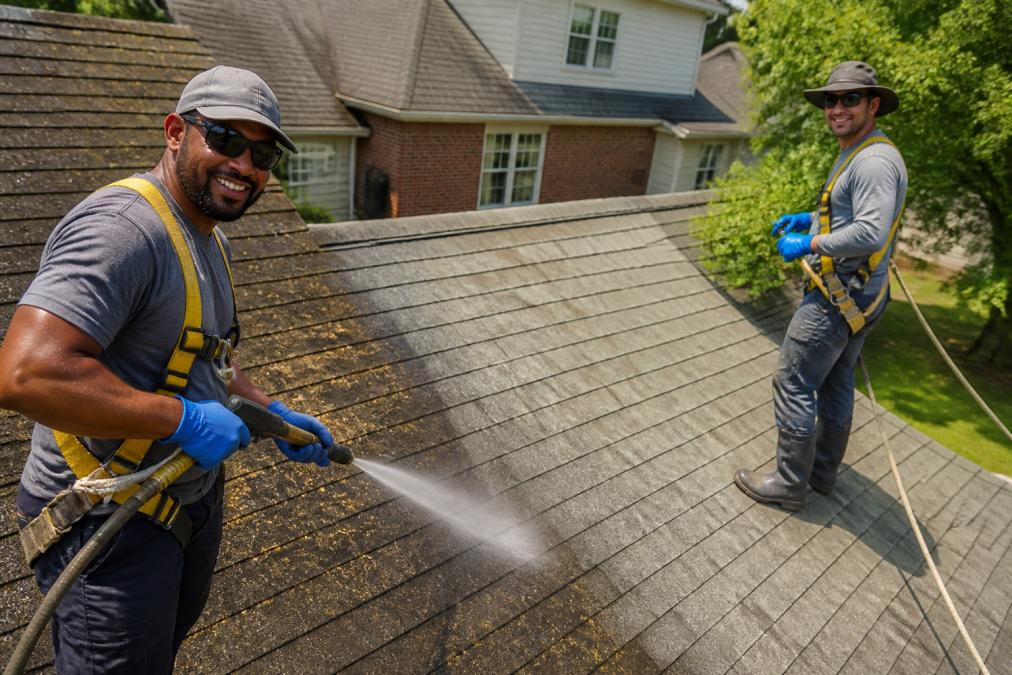
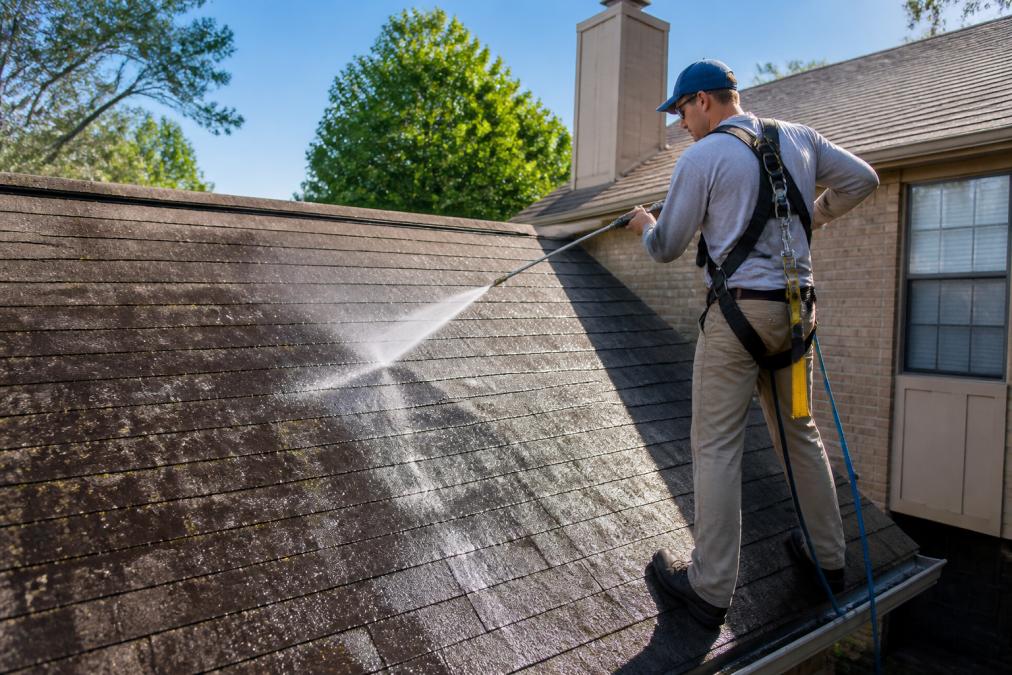
Soft washing is the industry standard for shingle roofs, and it works because it kills organisms rather than blasting them off. The method uses a low-pressure pump (typically under 100 PSI) to apply a diluted sodium hypochlorite solution, letting the chemical do the work during a dwell time of 10-15 minutes before a plain water rinse. Sodium hypochlorite is the same active ingredient as household bleach, just at a controlled concentration.
DIY Oxygen Bleach and No-Rinse Cleaners
Oxygen bleach cleaners use sodium percarbonate to lift organic stains through oxidation, and they're the safest DIY option for shingles. Products like 30 Seconds Outdoor Cleaner and Wet & Forget Outdoor Concentrate fall into this category. Oxygen-based formulas are non-toxic, biodegradable, and gentle on shingle granules, which makes them a reasonable choice for light algae staining and homeowners worried about runoff.
| Solution | Method | Best For | Main Drawback |
|---|---|---|---|
| Professional soft wash (sodium hypochlorite) | Low-pressure spray, dwell, rinse | Heavy algae, moss, lichen | Needs pro application, runoff care |
| Oxygen bleach (sodium percarbonate) | Spray-on, scrub, rinse | Light staining, eco-conscious DIY | Slow on heavy growth |
| No-rinse cleaner (Wet & Forget) | Hose-end spray, leave it | Maintenance, prevention | Results take weeks |
| Roof Maxx rejuvenation | Professional bio-oil treatment | Aging shingles, not just stains | Doesn't clean, only restores |
How to Remove Black Roof Streaks
Black roof streaks are colonies of gloeocapsa magma, and they return within one to three years if you only clean the surface without killing the organism. Removal follows a set sequence: apply a diluted cleaner, let it dwell, rinse gently, and address the source. Skipping the dwell time is the most common DIY mistake. The chemical needs contact time to penetrate and kill the algae, not just wet the shingle.
- Cover or pre-wet plants below the roof line.
- Mix your cleaner to the correct dilution (see ratios below).
- Apply from the bottom of the roof upward with a pump sprayer.
- Let it dwell 10-15 minutes. Do not let it dry.
- Rinse with low pressure, working top to bottom.
- Inspect for missed streaks and repeat if needed.
Is Pressure Washing Safe for Asphalt Shingles?
No. Pressure washing is not safe for asphalt shingles, and most manufacturers explicitly prohibit it. High-pressure water strips the protective granules that give shingles their UV and weather resistance, and once those granules are gone, they don't come back. The damage often isn't visible immediately, which is why so many homeowners don't realize the harm until shingles start failing years early.
Roof Cleaning Safety Precautions
Roof cleaning safety comes down to three risks: falls, chemical exposure, and electrical contact. Asphalt shingle roofs are slick when wet, and a fall from even a single-story roof causes serious injury. Proper safety precautions are non-negotiable, whether you hire out or do it yourself.
- Wear a fall-protection safety harness anchored to a secure point on steep pitches.
- Use non-slip shoes and never work on a wet or windy day.
- Wear chemical-resistant gloves, eye protection, and a respirator when handling sodium hypochlorite.
- Keep ladders on stable ground and away from power lines.
- Never clean near overhead electrical lines or roof-mounted equipment.
Dilution Ratios and Application Methods
| Staining Level | Bleach : Water Ratio | Approx. Sodium Hypochlorite Strength | Dwell Time | Notes |
|---|---|---|---|---|
| Light maintenance / prevention | 1 : 10 | ~1% | 5-10 min | Rinse promptly; do not let dry on shingles |
| Moderate black streaks | 1 : 3 | ~3% | 10-15 min | Standard starting point for gloeocapsa magma |
| Heavy algae, moss, or lichen | 1 : 1 | ~6% | 15-20 min | Pre-wet landscaping; may need a second pass |
| Oxygen bleach (sodium percarbonate) | ~1 cup powder : 1 gal water | N/A | 15-30 min | Follow label; safe near most plantings |
- Pump sprayer (most common DIY method). A 1-2 gallon manual or battery pump sprayer works for small roofs and touch-ups. Apply from the bottom of the roof upward so you do not streak clean shingles with runoff, then rinse top to bottom.
- Hose-end sprayer. Good for large, low-slope roofs and no-rinse products. The dilution is set by the dial, so verify the ratio with a bucket test before committing to the whole roof.
- Soft wash system (professional). A 12-volt or gas-powered pump delivering under 100 PSI, paired with a downstream injector, is the standard for full-roof soft washing. This is the only method that reliably reaches the ridge line without a ladder on the roof surface.
Protecting Your Shingle Warranty and Managing Runoff
What manufacturers typically prohibit or restrict:
- Pressure washing above low pressure. High-pressure water strips granules, and granule loss from mechanical damage is almost always excluded from coverage.
- Unapproved chemicals. Some warranties specify approved cleaning methods or require a manufacturer-approved cleaner; using a harsh or unlisted chemical can void the algae-resistance portion of the warranty.
- Improper application. Letting a cleaner dry on the roof, over-applying, or failing to rinse can be treated as homeowner negligence.
What a claim-safe cleaning looks like:
- Check the warranty first. Find the cleaning clause in your shingle warranty document or the manufacturer's published care guide. If it names an approved method, use it.
- Use low pressure only. Soft washing under 100 PSI is the standard that aligns with most manufacturer guidance.
- Document everything. Photograph the roof before and after, keep the receipt for any cleaner you buy, and note the date and method. If you hire a contractor, ask for their method in writing.
- Keep the algae-resistance intact. Many modern shingles carry a limited warranty against algae staining; harsh cleaning can void that specific coverage even if the rest of the warranty survives.
Runoff management matters just as much as warranty protection, and it is where most DIY jobs cause collateral damage. Sodium hypochlorite runoff can harm soil, plants, and aquatic life if it reaches storm drains, and many municipalities regulate what can enter those systems. The practical protections:
- Pre-wet landscaping. Soak garden beds, shrubs, and grass below the roof line with plain water before you start. Wet soil and wet leaves absorb far less chemical than dry ones.
- Cover sensitive plants. Drape plastic sheeting or tarps over vegetable gardens, flowering shrubs, and anything you cannot easily replace. Weight the edges so wind does not expose them.
- Divert runoff. Use sandbags, a temporary berm, or a tarp channel to direct rinse water away from storm drains, wells, and water features. Never let wash water flow directly into a drain.
- Rinse twice. After the roof rinse, rinse landscaping again with plain water to dilute any overspray that reached the soil.
- Choose oxygen-based formulas near gardens. Sodium percarbonate cleaners break down into oxygen and water, making them the safer choice when runoff cannot be fully contained.
Conclusion
The right method protects both your roof and your warranty, and getting it wrong costs far more than the cleaning itself. A2Z Wash Pros handles soft wash roof cleaning for homes across Houston, Katy, and Hitchcock, using low-pressure application that kills algae at the source without stripping your shingles. We offer free quotes, expert cleaning for roofs, driveways, and decks, and fast, reliable service.
Frequently Asked Questions
What is the best way to clean roof shingles?
The safest and most effective method for asphalt shingles is soft washing, which uses low pressure and a cleaning solution to kill algae and moss at the root. Professional soft washing with sodium hypochlorite is the industry standard because it avoids the granule loss caused by high pressure. For DIY homeowners, oxygen bleach cleaners offer a gentler alternative that is safe for plants and pets. Always avoid pressure washing, as it can strip shingle granules and void your warranty.
Is it okay to pressure wash an asphalt shingle roof?
No. Pressure washing asphalt shingles is not safe. The high pressure can blast away the protective granules that shield the asphalt from UV rays, leading to premature aging and leaks. It can also force water under the shingles, causing rot and mold in the attic. For roof cleaning, always use a soft wash approach with low pressure and a chemical cleaner. If a contractor offers to pressure wash your roof, find a different provider.
Can I use bleach to clean my roof?
Yes, diluted sodium hypochlorite (bleach) is the active ingredient in most professional roof cleaning solutions. However, it must be used carefully. A typical dilution ratio is 1 part bleach to 3 parts water, but this varies based on the strength of the bleach and the severity of the stains. Always protect landscaping by pre-wetting plants and rinsing runoff. For safety and best results, hiring a professional soft washing service is recommended.
How often should you clean asphalt shingles?
Most asphalt shingle roofs benefit from cleaning every 2 to 3 years, depending on your climate. In humid areas like Houston and Katy, where algae and mildew thrive, annual or biennial cleaning may be needed to prevent black streaks from returning. Regular roof maintenance not only improves curb appeal but also extends the life of your shingles. If you notice dark stains or moss growth, it is time to schedule a cleaning.