 how-to
Business Pressure Cleaning: What Property Managers Need
Table of Contents
- Why Business Pressure Cleaning Protects Your Property Investment
- What Commercial Power Washing Services Cover
- Pressure Washing Pricing Guide for Commercial Properties
- How to Vet a Pressure Cleaning Contractor
- Commercial Exterior Maintenance Tips That Extend Results
- One-Time Cleaning vs. Maintenance Contracts
- Conclusion
- Frequently Asked Questions
Last Updated: October 1, 2026
Why Business Pressure Cleaning Protects Your Property Investment
The sections below cover what commercial power washing services actually include, how pricing is structured, how to vet a contractor, and why a maintenance contract usually beats a one-time job.
What Commercial Power Washing Services Cover
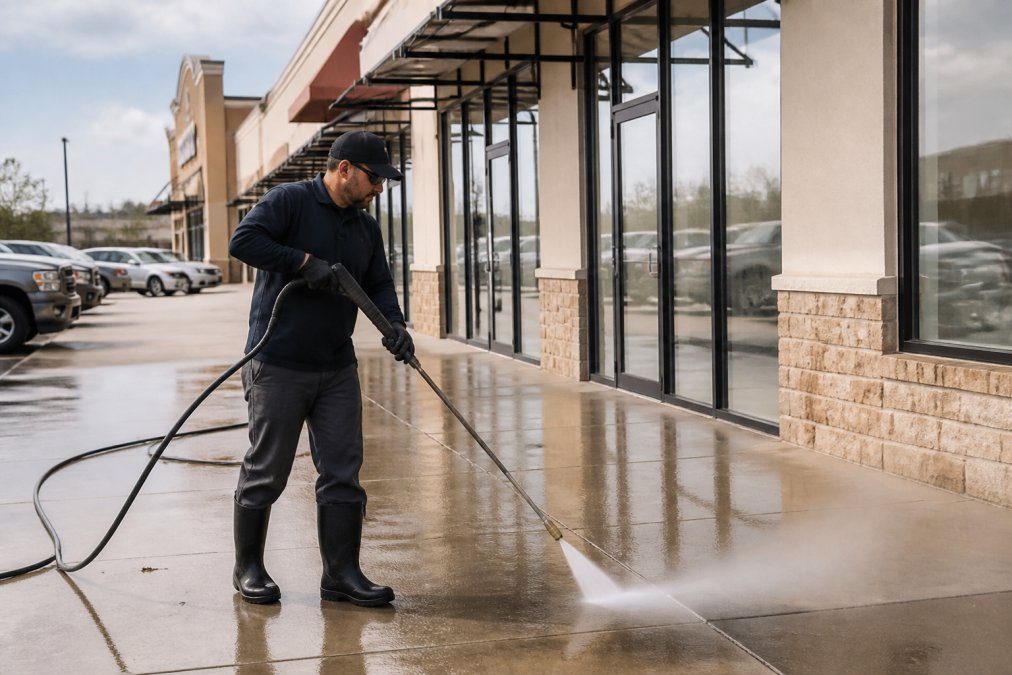
Commercial power washing services cover far more than a sidewalk rinse. A proper scope of work addresses every hard and soft surface on the property, each with its own pressure and chemical requirements.
Surfaces and Structures
A standard commercial scope typically includes:
- Concrete walkways, curbs, and loading zones
- Parking lots and parking structure cleaning
- Building facades and commercial storefront glass framing
- Dumpster pads and grease removal zones
- Awnings, canopies, and drive-through lanes
- Sidewalks with gum removal and stain treatment
Soft Washing vs. Pressure Washing
Soft washing is a low-pressure cleaning method that relies on biodegradable detergents to kill organic growth, rather than force to blast it away. Pressure washing uses high PSI to physically remove dirt and stains from hard surfaces.
Pressure Washing Pricing Guide for Commercial Properties
Commercial pressure washing pricing depends on square footage, surface type, access, and how much stain treatment is required. There is no honest flat rate, and any quote given without a site walk is a guess. What separates a useful quote from a vague one is whether the contractor can explain which variables moved the number and by how much.
| Pricing Method | How It Works | Best For |
|---|---|---|
| Per square foot | Rate applied to total cleanable area | Large parking lots, open concrete |
| Flat project fee | One price for the full scope | Storefronts, defined single jobs |
| Maintenance contract | Recurring fee on a set schedule | Strip malls, multi-tenant properties |
What Actually Moves the Number
A per-square-foot rate is only the starting point. The final invoice is built from a stack of cost drivers, and understanding them is how a property manager spots an underpriced bid that will turn into change orders.
- Total square footage and surface count. A single 20,000 sq ft parking lot prices lower per square foot than five separate 4,000 sq ft surfaces, because setup, water access, and equipment repositioning repeat at each one.
- Surface type. Smooth concrete cleans fast. Exposed aggregate, brick pavers, and stamped concrete trap dirt and require slower passes, which raises labor hours per square foot.
- Oil and grease removal. Degreaser, dwell time, and sometimes a second pass are required. A dumpster pad or loading zone with years of accumulated grease can cost more to treat than the surrounding lot costs to clean.
- Gum removal. Chewing gum removal is typically priced per piece or per square foot of gum-affected area, not folded into the general rate, because it is a separate tool and a separate labor motion.
- Water access and drainage. If the nearest spigot is 300 feet from the work zone, the contractor is running hose, adding time, or bringing a water tank. Both show up in the price.
- After-hours scheduling. Overnight and pre-opening work carries a labor premium and sometimes a lighting or noise-ordinance constraint that slows production.
- Frequency. A property cleaned quarterly prices lower per visit than the same property cleaned once, because the crew spends less time on established growth and stain treatment.
Maintenance Contracts vs. One-Time Pricing
This is the gap most pricing guides skip. A one-time job is priced to cover the full reset: heavy growth, deep stains, and the labor to bring a neglected surface back to baseline. A maintenance contract is priced against a maintained surface, which is a fundamentally cheaper starting condition.
How to Compare Bids Without Getting Burned
When two bids for the same property come back far apart, the difference is usually scope, not margin. Before choosing, confirm that every bid covers the same surfaces, the same stain treatment, the same frequency, and the same disposal and runoff handling. The cheapest bid is frequently the one that quietly excluded the dumpster pad.
How to Vet a Pressure Cleaning Contractor
Vetting a contractor comes down to three things: proof of licensing and insurance, a written scope, and references from comparable commercial properties. Skip any one of these and you carry the risk. For commercial properties, the risk is not just a bad cleaning job, it is a liability transfer that lands on your insurance policy.
Licensing, Insurance, and Compliance
Ask for a certificate of insurance before work begins, and read it rather than filing it. Three coverage lines matter:
- General liability. Protects you if a technician damages a vehicle, a storefront, or a tenant's property. Confirm the policy is current and that the limits are adequate for the size of your property.
- Workers' compensation. Protects you if a worker is injured on your site. Without it, an injured worker's claim can reach your property insurer.
- Commercial auto. Protects you if a company vehicle damages your lot, a gate, or a tenant's car during the job.
Runoff, Stormwater, and Environmental Compliance
Runoff from commercial cleaning can carry detergents, oil, and debris into storm drains, and many municipalities regulate what enters the stormwater system. Commercial sites are frequently covered by stormwater permit requirements that treat wash water as an industrial discharge, not as rainwater.
What a compliant contractor does:
- Uses containment berms or blocking to keep wash water out of storm drains
- Recovers and properly disposes of wastewater where local rules require it
- Uses biodegradable detergents and avoids solvent-based degreasers near drains and landscaping
- Knows the difference between a sanitary sewer connection and a storm drain, and which one your site is permitted to use
OSHA and On-Site Safety
Commercial cleaning involves fall hazards, electrical hazards near water, and chemical handling. Contractors are expected to follow OSHA standards for personal protective equipment, ladder and lift safety, and hazard communication for the chemicals they use. You do not need to audit their program, but you should ask whether they have a written safety program and whether their crews are trained on it.
What to Ask Before You Sign
Beyond paperwork, ask for:
- References from other commercial properties, not just residential jobs
- A written scope listing every surface and method
- Proof of experience with your specific surface types
- Clear scheduling commitments, including how they handle weather delays
- A named point of contact for the duration of the contract
- Confirmation of how they handle runoff and wastewater on your site
Commercial Exterior Maintenance Tips That Extend Results
Commercial exterior maintenance tips that actually extend results focus on frequency and prevention, not on cleaning harder. A cleaned surface stays clean longer when you remove the conditions that let grime return.
Three habits make the biggest difference:
- Schedule cleaning before growth establishes. Algae and mildew return faster once they have a foothold. Cleaning on a fixed cycle prevents that.
- Address oil and grease immediately. Fresh stains lift easily. Stains left for months become permanent discoloration.
- Keep drainage clear. Standing water near foundations feeds organic growth and speeds surface damage.
One-Time Cleaning vs. Maintenance Contracts
A maintenance contract almost always costs less over a year than repeated one-time jobs, and it keeps the property consistently presentable. One-time cleaning makes sense for a specific event; a contract makes sense for an ongoing asset.
Compare the two:
| Factor | One-Time Cleaning | Maintenance Contract |
|---|---|---|
| Cost per visit | Higher per job | Lower, locked rate |
| Scheduling | You chase availability | Set on a calendar |
| Results | Resets to clean, then declines | Stays consistently clean |
| Budgeting | Unpredictable | Fixed, forecastable |
| Surface protection | Reactive | Preventative maintenance |
Conclusion
The challenge with commercial exterior cleaning is not finding someone with a pressure washer. It is finding a contractor who matches the right method to each surface, carries proper insurance, and shows up on schedule. Get that wrong and you trade a cleaning bill for a repair bill.
Frequently Asked Questions
How often should a commercial building be pressure washed?
Most commercial properties benefit from professional cleaning two to four times per year, depending on foot traffic, weather exposure, and surrounding vegetation. High-traffic storefronts and parking structures in humid climates may need monthly or quarterly service to prevent mildew buildup and traffic grime from becoming embedded. Property managers should inspect surfaces seasonally and schedule business pressure cleaning before grime hardens into stains that require more aggressive treatment.
What surfaces can be cleaned during business pressure cleaning?
Commercial pressure cleaning handles concrete sidewalks, parking lots, parking garages, building facades, brick and stone walls, loading docks, dumpster pads, and storefront entryways. Delicate surfaces like painted wood, stucco, and older roofing require soft washing with lower pressure. A qualified contractor will assess each surface and adjust PSI and cleaning solutions accordingly to avoid damage while still removing oil stains, gum, and mildew.
Do I need a license to pressure wash commercially?
Licensing requirements vary by state and municipality. Some states require a general contractor license for certain exterior cleaning work, while others have no specific license but mandate business registration and insurance. Regardless of licensing, any contractor working on your property should carry general liability insurance and workers' compensation coverage. Always request certificates of insurance before work begins to protect your business from liability.
How do I prepare my business property for a pressure washing service?
Clear the work area by moving vehicles, outdoor furniture, and signage away from surfaces to be cleaned. Close windows and doors, cover sensitive electrical outlets, and notify tenants or employees about the scheduled service. Ensure the contractor has access to a water source and confirm they handle water reclamation if required by local runoff regulations. Clear communication before the appointment prevents delays and ensures thorough results.