 ultimate-guide
Commercial Storefront Cleaning in Galveston County
Table of Contents
- What Commercial Storefront Cleaning Covers
- Commercial Pressure Washing Services That Protect Your Property
- Building a Pressure Washing Maintenance Schedule
- How to Choose a Commercial Cleaning Company
- Curb Appeal ROI and Eco-Friendly Cleaning Standards
- Janitorial Services and Floor Care for Storefronts
- Frequently Asked Questions
Last Updated: September 20, 2026
What Commercial Storefront Cleaning Covers
Commercial storefront cleaning in Galveston County is the scheduled removal of salt residue, algae, mold, and grime from the exterior surfaces customers see before they ever walk through your door. It covers building facades, sidewalks, entryways, parking areas, and windows. At A2Z Wash Pros, we treat it as one system rather than a list of separate jobs, because coastal grime rarely stays in one place.
Exterior Surfaces and Facade Cleaning
Facade cleaning is the process of removing biological growth, salt film, and airborne dirt from a building's exterior walls and trim without damaging the underlying material. Stucco, brick, painted wood, and metal panels all respond differently to water pressure and detergent, so the surface decides the method.
Sidewalks, Parking Lots, and Entryways
Entryways and walkways carry the traffic, so they show wear first. Sidewalk cleaning removes the black organic film that builds in shaded, damp spots, and parking lot maintenance handles oil drips, gum, and tire marks.
Commercial Pressure Washing Services That Protect Your Property
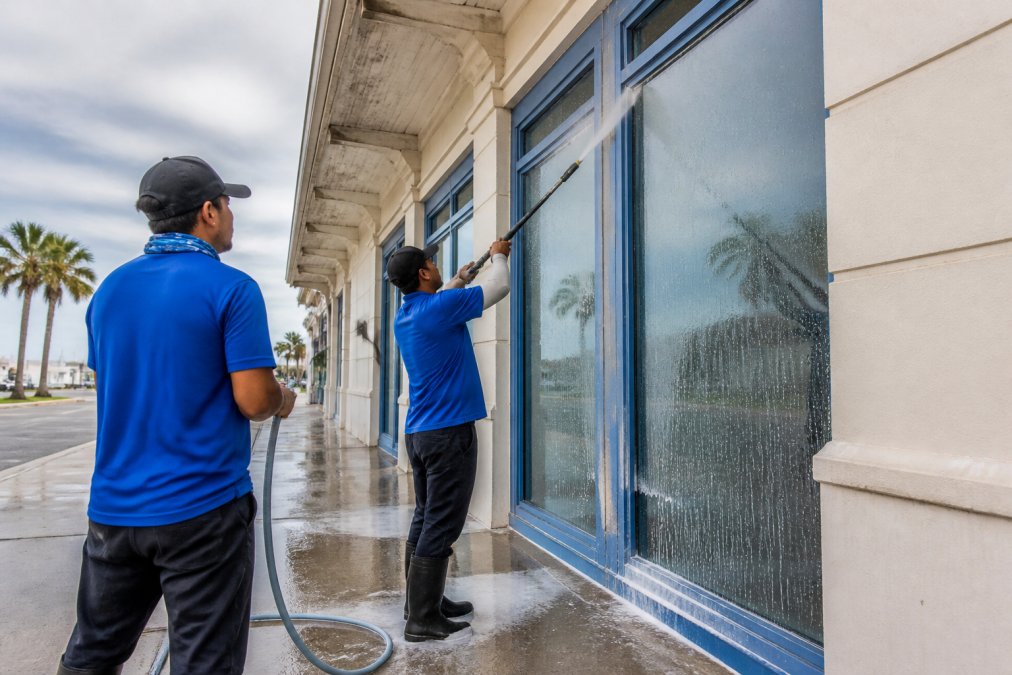
Commercial pressure washing services in a coastal market are not just about appearance. The right approach removes salt and growth without driving water into seams, seals, and finishes where it causes damage. That distinction drives every method choice we make.
Soft Washing vs. High-Pressure Cleaning
Soft washing uses low pressure and cleaning solutions to kill and lift organic growth. High-pressure cleaning uses mechanical force to strip heavy buildup from hard, durable surfaces like concrete. Using the wrong one on the wrong surface is the single most common cause of avoidable damage.
| Method | Pressure Level | Best For | Avoid On |
|---|---|---|---|
| Soft washing | Low | Painted facades, siding, roofs, awnings | Heavy oil on concrete |
| High-pressure cleaning | High | Concrete sidewalks, dumpster pads, curbs | Painted wood, mortar, seals |
| Surface restoration | Medium | Faded concrete, stained pavers | Delicate trim |
Salt-Air Corrosion Mitigation for Coastal Storefronts
Salt-air corrosion mitigation is the practice of routinely rinsing chloride-heavy residue from metal fixtures, railings, and hardware before it pits the surface. Coastal properties face a corrosion cycle that inland properties simply do not.
Building a Pressure Washing Maintenance Schedule
A pressure washing maintenance schedule is a written plan that assigns a cleaning frequency to each surface based on its material, its exposure to salt and weather, and how much foot traffic it takes. The schedule should follow the coast's seasons, not the calendar quarter, because the forces that soil a storefront here do not arrive on a quarterly clock.
How to Set Frequency by Surface and Exposure
Frequency should be driven by three variables: material, exposure, and traffic. A painted wood facade two blocks from the water needs a shorter cycle than a metal panel wall set back from the shore. A shaded north-facing entryway grows organic film faster than a sun-exposed one.
A practical starting framework looks like this:
- Metal fixtures, handrails, and door hardware: rinse on the shortest cycle, since salt collects in crevices around hinges and base plates and pits the finish from the inside out.
- Painted facades and siding: soft wash on a seasonal cycle, with an extra pass after storm events that drive spray and debris against the wall.
- Concrete sidewalks and entryways: clean on a monthly cycle during peak foot traffic, and spot-treat gum, oil, and tire marks between full cleanings.
- Parking areas and dumpster pads: degrease on a schedule tied to use, not the calendar, because grease and organic waste build at a rate that depends on the business.
- Windows and glass: clean more often than walls, since salt film and pollen show on glass before they show on masonry.
Seasonal Cleaning Calendar for Galveston County
- Spring: Full facade soft wash and window washing after pollen season, plus a rinse of metal fixtures to clear winter salt accumulation.
- Summer: Sidewalk and entryway cleaning on a monthly cycle during peak foot traffic, with extra attention to shaded, damp spots where organic film builds fastest.
- Fall: Parking lot degreasing and gutter clearing before heavy rain, plus a check on seals and caulking ahead of storm season.
- Winter: Salt and storm-debris rinsing, plus a check on seals and caulking.
That rhythm exists because mold and mildew removal needs peak in warm, damp months, while salt exposure runs year-round. A schedule that ignores this pattern leaves you cleaning the same surfaces twice.
Adjusting the Schedule After Storms
The fixed calendar is a baseline, not a ceiling. Storm events override it. After a heavy rain or a tropical system, the priority order shifts: clear drainage first, rinse salt and debris from metal and glass second, and reassess the facade last, since walls tolerate a short delay better than hardware does. Building the storm response into the written plan means no one has to decide under pressure what to clean first.
How to Choose a Commercial Cleaning Company
Choosing a commercial cleaning company comes down to verification, not the lowest bid. An insured and bonded contractor carries liability coverage and a surety bond, which protects your property if something is damaged or a worker is injured on site. Ask for proof before work starts, not after.
- Proof of general liability insurance and bonding
- Written scope that names each surface and method
- References from similar commercial properties
- Clear safety practices for chemical handling
- A defined re-service policy if results fall short
Insurance, Bonding, and Safety Standards
The Occupational Safety and Health Administration's guidance on pressure washing safety covers the hazards crews face around high-pressure equipment and cleaning chemicals. A company that can explain its safety approach in plain language is usually the one that also protects your building.
Curb Appeal ROI and Eco-Friendly Cleaning Standards
Curb appeal is a measurable business asset, not a vanity line item. A clean, well-kept exterior signals to customers that the business inside is run the same way. That perception is why storefront curb appeal ROI shows up in foot traffic and leaseability, not just in photos.
Janitorial Services and Floor Care for Storefronts
Janitorial services and exterior cleaning are one program, not two. Daily janitorial work handles what customers touch, while exterior building maintenance handles what they see first. Splitting them between vendors usually means nobody owns the transition zone at the door.
Why Interior and Exterior Care Belong Together
The mechanism is simple. Exterior surfaces collect salt, sand, and organic film. Foot traffic moves that material indoors. Once inside, grit abrades floor finish and works into carpet backing, where it is far harder to remove than it would have been at the door. A single vendor that controls both sides of the threshold can break that chain by keeping the entryway clean and matching interior cleaning frequency to exterior conditions.
Matching Interior Frequency to Exterior Conditions
| Program | Frequency | Primary Goal |
|---|---|---|
| Daily janitorial | Daily to weekly | Sanitization and disinfection |
| Entryway matting and spot care | Daily | Capture grit before it reaches finished floors |
| Floor stripping and waxing | Quarterly to annually | Surface protection and shine |
| Carpet cleaning | Quarterly | Soil and stain removal |
| Exterior pressure washing | Monthly to seasonal | Curb appeal and surface life |
Floor stripping and waxing and carpet cleaning keep interior surfaces presentable, and they pair naturally with a scheduled exterior plan. Interior floors track in whatever the sidewalk holds, so a dirty entryway means more interior work. Entryway matting is the cheapest intervention in the whole program: it captures grit at the door and reduces the load on both finished floors and carpet.
One Vendor, One Standard
A single vendor that covers both sides keeps the standard consistent from the parking lot to the sales floor. When one company owns the exterior wash and the interior janitorial program, the crew that cleans the sidewalk also sees what is being tracked inside, and the schedule adjusts accordingly. That visibility is hard to replicate when two vendors each see only half the problem.
Frequently Asked Questions
How often should commercial storefronts be pressure washed?
Most Galveston County storefronts need professional cleaning every 3 to 6 months. Coastal properties exposed to salt air and humidity may require monthly soft washing to prevent corrosion and mold growth. High-traffic areas like entryways and sidewalks benefit from weekly or biweekly attention. A customized pressure washing maintenance schedule accounts for your building materials, foot traffic, and proximity to the coast.
Does commercial pressure washing remove graffiti and oil stains?
Yes. Commercial pressure washing services use commercial-grade detergents and adjustable pressure levels to lift oil stains, grease, graffiti, and embedded grime from concrete, asphalt, and masonry. For stubborn stains, technicians apply degreasers and surface restoration treatments before washing. Soft washing handles delicate surfaces like painted facades and wood without causing damage.
What safety standards should a commercial cleaning company follow in Texas?
In Texas, commercial cleaning companies should carry general liability insurance and workers' compensation coverage. Technicians should follow OSHA guidelines for chemical handling and fall protection when working at height. Reputable companies train staff on proper equipment use, secure work areas to protect pedestrians, and use eco-friendly cleaning products that meet EPA Safer Choice standards where applicable.
Is professional storefront cleaning considered a tax-deductible business expense?
Yes. The IRS treats routine commercial cleaning and exterior maintenance as ordinary and necessary business expenses for property owners and tenants. Keep detailed invoices that separate cleaning services from capital improvements. Consult your tax advisor to confirm how your specific situation applies, especially if you own multiple commercial properties in Galveston County.
Coastal storefronts age faster than inland ones, and the gap widens every season you wait. A2Z Wash Pros handles commercial storefront cleaning across Houston, Katy, and Galveston County with professional pressure washing, soft washing, and surface restoration built for salt air and humid weather. Our crews are fast, reliable, and rated 4.6 stars by the properties we serve. Get a free quote from A2Z Wash Pros today and put your exterior on a schedule that protects it year-round.