 ultimate-guide
Hot Water Pressure Washer: The Complete Buyer's Guide
Table of Contents
- Why Hot Water Pressure Washers Outperform Cold Water Systems
- Cold Water vs Hot Water Pressure Washer: Which Tackles Your Cleaning Job
- Key Performance Metrics: GPM, PSI, and Heating Capacity Explained
- How to Remove Oil Stains from Concrete with Heat and Detergent
- Power Source Options: Diesel, Gas, Electric, and LP Systems
- Pressure Washer Maintenance Tips for Long-Term Durability
- Industrial vs Commercial Grade: What You Actually Need
- Total Cost of Ownership: Beyond the Purchase Price
- Frequently Asked Questions
Last Updated: September 27, 2026
Why Hot Water Pressure Washers Outperform Cold Water Systems
A hot water pressure washer delivers superior cleaning power because heat breaks down grease, oil, and stubborn grime at the molecular level. Thermal energy combined with mechanical force and detergent becomes exponentially more effective than cold water alone on oil stains, industrial residue, and heavily soiled surfaces.
Heat reduces surface tension, allowing deeper penetration into concrete and asphalt. For homeowners with algae-laden roofs or oil-stained driveways, this thermal advantage delivers faster cleaning times and eliminates jobs that cold water cannot fully address.
Cold Water vs Hot Water Pressure Washer: Which Tackles Your Cleaning Job
Cold water pressure washers excel at removing loose dirt, dust, and surface debris, ideal for rinsing vehicles and general maintenance. If your challenge is removing particles rather than dissolving stubborn substances, cold water works at lower equipment cost.
Hot water pressure washers are essential when oil, grease, or baked-on contaminants are involved. Thermal energy breaks molecular bonds that cold water cannot address, making hot water the only realistic solution for parking lot stains and loading dock grease.
Residential homeowners preparing property for sale benefit most from hot water systems because curb appeal depends on removing deep stains, black algae streaks, oil marks, and weathered surfaces. A hot water pressure washer restores these to near-original condition, directly increasing property value perception.
For commercial strip malls and storefronts, hot water systems handle accumulated grease and grime efficiently. A single hot water pass often eliminates what requires multiple cold water attempts, directly improving profitability.
Key Performance Metrics: GPM, PSI, and Heating Capacity Explained
Gallons per minute (GPM) measures water volume delivered. Most residential hot water pressure washers operate 2.5-4 GPM; commercial equipment ranges 4-8+ GPM. For driveway cleaning, 3-4 GPM is sufficient; for commercial parking lots, 5+ GPM handles large areas efficiently.
Pounds per square inch (PSI) describes water exit force. Residential systems operate 2,500-3,500 PSI; commercial equipment reaches 4,000-5,000+ PSI. Higher PSI doesn't always improve results, excessive pressure etches concrete, strips paint, and damages composite decks. Concrete driveways tolerate 3,000-4,000 PSI; wooden decks need 1,500-2,500 PSI maximum.
Heating capacity determines how quickly water temperature rises and maintains it under load, measured in BTU. A well-designed heating coil maintains 160-180°F even during continuous operation. Undersized systems lose temperature rapidly, undermining the thermal advantage.
The interaction between metrics matters more than any single number. Excellent heating capacity often outperforms high PSI on oily surfaces; inadequate heating wastes pump potential.
How to Remove Oil Stains from Concrete with Heat and Detergent
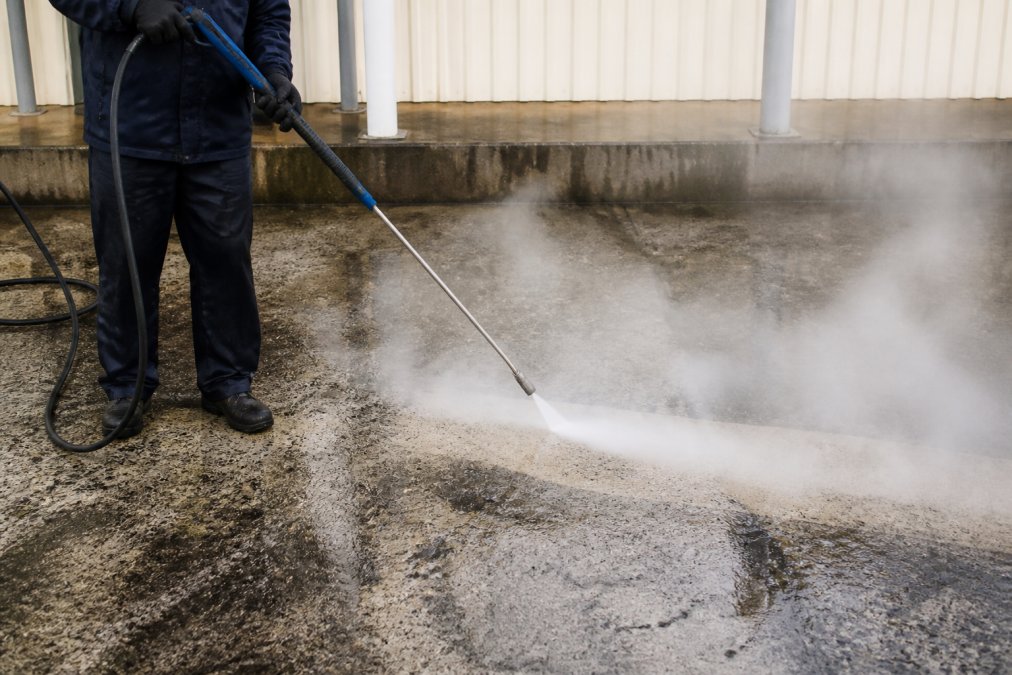
Oil stains on concrete penetrate deeply and bond chemically, resisting cold water and scrubbing alone. A hot water pressure washer combined with degreasing detergent works through three mechanisms: heat softens oil, detergent breaks it into smaller particles, and mechanical agitation lifts it away.
Apply degreasing detergent formulated for concrete and let it sit 10-15 minutes to penetrate and break down oil. Hot water at 160-180°F amplifies effectiveness by reducing oil viscosity and increasing susceptibility to detergent surfactants, proving the value of a hot water pressure washer over cold systems.
Use moderate PSI around 2,500-3,000 for concrete with steady, controlled passes. Aggressive pressure risks etching the surface. One thorough pass with hot water and detergent removes 80-90% of the stain; stubborn residual marks fade within weeks as remaining oil oxidizes.
For severe stains, a second application may be necessary. Allow concrete to dry 24 hours between applications to prevent detergent dilution and maximize cleaning results.
Power Source Options: Diesel, Gas, Electric, and LP Systems
Gasoline engines are most common for residential and portable commercial systems. They're affordable, widely available, and start easily without electrical infrastructure. Drawbacks: noise, emissions, and regular maintenance including oil changes and spark plug replacement.
Diesel engines dominate heavy-duty commercial applications for superior fuel efficiency and durability. Diesel-fired burners heat water more efficiently, reducing fuel consumption. Higher upfront cost justifies itself through lower operating costs on high-volume jobs.
Electric-powered systems appeal to environmentally conscious users and those in enclosed spaces. They eliminate fuel handling and produce zero emissions. Limitation: they require reliable electrical supply and deliver less power than fuel-powered equipment, making them suitable for light residential cleaning but inadequate for sustained commercial use.
Liquid propane (LP) systems offer a middle ground, cleaner than gasoline with better power than electric. LP-fired burners heat water efficiently and the fuel is widely available. LP systems appeal to operators wanting portability without the emissions of gasoline. They're less common than gas or diesel, which can complicate fuel sourcing in some areas.
The practical choice depends on your duty cycle and location. Homeowners with occasional cleaning needs benefit from gas-powered portability. Commercial operators running equipment 40+ hours weekly favor diesel for fuel efficiency. Facilities with strict emissions requirements choose electric despite the power trade-off.
Pressure Washer Maintenance Tips for Long-Term Durability
Your hot water pressure washer's heating coil and burner assembly are precision components that require consistent care. The most common failure point is scale buildup inside the heating coil, mineral deposits from hard water reduce heat transfer and eventually block water flow entirely. Prevent this by running a descaling solution through your system monthly, especially if you operate in areas with hard water. Many operators neglect this single step and then face expensive coil replacement.
Check the thermal relief valve before each use. This safety component prevents pressure from building excessively inside the system. A stuck or faulty thermal relief valve can damage the pump and create dangerous operating conditions. Listen for unusual sounds during startup, a grinding noise often indicates pump wear requiring professional service.
Inspect hose assemblies and quick-connect nozzles regularly. High-pressure hoses degrade from UV exposure and repeated flexing. Replace hoses showing cracks or bulges before they fail under pressure. Quick-connect nozzles wear over time; if water sprays sideways instead of straight, replacement nozzles are inexpensive and restore spray pattern integrity.
Drain fuel from gas-powered equipment if you're storing it for more than 30 days. Old fuel gums up carburetors and causes starting problems. For diesel systems, maintain proper fuel quality and monitor for water contamination in the fuel tank. Run your equipment regularly, weekly operation is ideal. Systems sitting unused for months often require professional service to restore function.
The trigger gun mechanism deserves attention too. Mineral deposits and debris can jam the trigger, making operation difficult or impossible. Flush the gun regularly with clean water and store it properly to prevent damage. A malfunctioning trigger gun doesn't just reduce comfort; it often indicates internal corrosion affecting other components.
Industrial vs Commercial Grade: What You Actually Need
The distinction between commercial and industrial-grade equipment matters more than marketing language suggests. Commercial-grade systems are designed for regular use by trained operators, typically 20-40 hours weekly. They balance power, durability, and cost. Most property managers and service businesses operate commercial-grade equipment successfully because it matches their actual duty cycle.
Industrial-grade equipment handles 60+ hours weekly and tolerates continuous operation under demanding conditions. These systems feature heavier-duty pumps, larger heating capacity, and components rated for sustained high-temperature operation. Industrial equipment costs significantly more because it's engineered for different performance standards.
The mistake many operators make is overbuying.
Total Cost of Ownership: Beyond the Purchase Price
Evaluating a hot water pressure washer based on purchase price alone leads to poor decisions. The true cost includes fuel, maintenance, repairs, and eventual replacement. An inexpensive system that requires frequent repairs and consumes fuel inefficiently often costs more over five years than a higher-quality alternative.
Frequently Asked Questions
Is a hot water pressure washer worth the investment?
Yes, if you regularly deal with oil stains, grease buildup, or heavy algae growth. Hot water pressure washers cut cleaning time by 30-50% compared to cold water systems and reduce the need for harsh chemicals. For residential properties with driveways or decks, the faster results and better surface protection justify the higher upfront cost. The payoff depends on your cleaning frequency and the types of stains you face.
Can any pressure washer use hot water?
No. Standard cold water pressure washers cannot handle hot water without damage to internal components. Hot water systems require a heating coil, burner assembly (diesel-fired, oil-fired, or electric), and reinforced pump seals designed to withstand thermal stress. Attempting to retrofit hot water into a cold-only unit will void the warranty and cause premature failure. Always purchase a unit rated for your intended water temperature.
What are the most common maintenance issues with heated pressure washers?
Scale buildup in the heating coil is the leading issue, especially in hard-water areas. Thermal relief valves can stick if not flushed regularly, and fuel lines in diesel-fired or oil-fired burners require periodic inspection. Preventative maintenance includes weekly flushing with descaling solution, checking hose assemblies for cracks, and inspecting the pump for wear. Regular maintenance extends equipment life by years and prevents costly downtime.
How does a hot water pressure washer remove grease better than cold water?
Heat breaks down the molecular bonds in grease and oil, making them easier to suspend in water. Combined with high-pressure spray (typically 3000-4000 PSI) and detergent injection, hot water achieves superior degreasing on driveways, parking lots, and commercial storefronts. The water temperature rise from the heating coil activates soap molecules more effectively, reducing the agitation time needed and lowering chemical consumption while improving cleaning power.