 ultimate-guide
House Soft Washing: A Complete 2026 Guide
Table of Contents
- What Is House Soft Washing?
- Soft Wash vs Pressure Wash: Key Differences
- Why House Soft Washing Works: Benefits and Results
- Best Soft Wash Solution for Siding and Exterior Surfaces
- Equipment and Setup for House Soft Washing
- Step-by-Step House Soft Washing Process
- House Soft Washing Cost and Budget Considerations
- Common Mistakes and How to Avoid Them
- Frequently Asked Questions
Last Updated: September 19, 2026
What Is House Soft Washing?
House soft washing is a low-pressure cleaning method that uses specialized chemical solutions to remove organic growth, algae, mold, and biofilm from exterior surfaces. Unlike high-pressure systems that rely on water velocity, house soft washing applies biodegradable cleaning agents that break down contaminants at the molecular level, then rinses them away with minimal water pressure.
The process combines surfactant-based solutions with dwell time, the period chemicals remain on the surface to work effectively. This approach protects delicate materials like roof shingles, wood siding, and composite decking from damage while delivering superior long-term results.
House soft washing addresses what pressure washing cannot: the biological root cause of staining. Black streaks on roofs, green algae on siding, and orange mold on decks are living organisms. Soft wash chemicals kill these organisms at their source, which is why results last significantly longer.
Soft Wash vs Pressure Wash: Key Differences
Pressure washing uses high-pressure water streams (typically 3,000-4,000 psi) to physically blast away dirt and buildup. It works well on concrete driveways and heavily soiled commercial surfaces but damages soft materials: it etches concrete, splinters wood, dislodges roof shingles, and voids manufacturer warranties on residential surfaces.
House soft washing applies low-pressure water (under 500 psi) combined with chemical solutions designed to dissolve organic growth. The chemicals do the heavy lifting while water provides gentle rinsing. This method works on roofs, vinyl siding, brick, stucco, composite decking, and delicate finishes without risk of damage.
Pressure washing is mechanical; soft washing is chemical. For homeowners, most residential exteriors benefit from the gentler, more effective soft wash approach.
Comparison Table: Soft Wash vs Pressure Wash
| Factor | Soft Wash | Pressure Wash |
|---|---|---|
| Water Pressure | Under 500 psi | 3,000-4,000+ psi |
| Primary Action | Chemical dissolution | Mechanical force |
| Best For | Roofs, siding, decks, delicate surfaces | Concrete, driveways, heavy buildup |
| Risk of Damage | Minimal when done correctly | High on soft materials |
| Dwell Time | 15-30 minutes | None |
| Results Longevity | 12-24 months or longer | 6-12 months |
| Environmental Impact | Biodegradable solutions available | Water runoff only |
| Warranty Impact | Generally safe | May void warranties |
Why House Soft Washing Works: Benefits and Results
House soft washing targets the root cause of exterior staining. Pressure alone removes algae but leaves spores that regrow within months. Soft wash chemicals kill the organism entirely, preventing rapid regrowth and extending the time between cleanings.
Homeowners appreciate the protection soft washing provides. One aggressive pressure wash can cause thousands of dollars in damage to expensive materials. House soft washing eliminates that risk while restoring appearance.
Curb appeal improves immediately and lasts. Black streaks, green algae, and orange mold disappear. Unlike pressure washing, soft washing produces uniform, natural-looking results that enhance property value, significant for homeowners preparing to sell.
Soft wash chemicals address the biological cause of staining, so results persist longer. Many homeowners need cleaning only every 18-24 months instead of annually, saving money and hassle over time.
Best Soft Wash Solution for Siding and Exterior Surfaces
Choosing the right cleaning solution is critical. Not all soft wash chemicals work equally on all surfaces, and using the wrong formula can damage the material you're trying to protect.
Common Soft Wash Chemicals and Their Uses
Sodium hypochlorite (household bleach diluted to 10-15%) is the most common active ingredient. It's highly effective against algae, mold, and mildew but can bleach some materials and requires careful dilution. It works well on roof shingles, concrete, and vinyl siding but may damage certain finishes.
Surfactants reduce water tension and help cleaning solutions cling to surfaces longer, improving dwell time effectiveness. Quality soft wash solutions always include surfactants alongside the active cleaning agent.
Sugar soap (alkaline cleaner) is gentler than bleach and works well on painted surfaces, delicate siding, and wood without bleaching risk.
Specialty formulations address specific problems. Gloeocapsa magma (black roof streaks) and orange deck mold require different chemical ratios than green algae on siding. Professional cleaners adjust composition based on surface and contaminant.
Chemical Safety and Environmental Compliance
Proper dilution ratios are essential, too strong risks surface damage; too weak reduces effectiveness. Protective gear including gloves, eye protection, and respiratory equipment should always be worn.
Many municipalities regulate chemical runoff and water discharge. Biodegradable soft wash solutions are increasingly standard, cleaning effectively while breaking down naturally and posing minimal risk to landscaping, pets, or water systems.
Professional house soft washing includes careful masking of sensitive areas and controlled application that prevents overspray and plant damage.
Equipment and Setup for House Soft Washing
Successful house soft washing requires specific equipment designed for low-pressure chemical application, not standard pressure washing gear.
Essential Gear: Pumps, Injectors, Nozzles, and Poles
A downstream injector draws cleaning solution from a separate tank and mixes it with water at the nozzle, allowing precise chemical concentration control while preventing pump and hose damage from corrosive chemicals.
Low-pressure nozzles (typically 0° or 15° tips) deliver water at reduced psi for even coverage, not force. Roof work uses different nozzles than siding.
Pressure washer pumps rated for soft washing handle chemical solutions. Standard pumps corrode or fail when exposed to cleaning agents. Dedicated soft wash pumps prevent equipment failure.
Telescoping poles and J-rods extend reach safely. Roof work requires 25-30 foot poles; deck and siding work uses shorter poles. Quality poles are lightweight yet rigid enough to maintain nozzle control.
Chemical tanks should be food-grade, UV-resistant plastic with proper venting and clear labeling. A 100-200 gallon tank is typical for residential work.
Step-by-Step House Soft Washing Process
The house soft washing process follows a disciplined sequence. Each step builds on the previous one to ensure thorough cleaning and lasting results.
Pre-Wash Inspection and Setup
Inspect the property thoroughly before applying chemicals. Assess surface condition, identify existing stains, mold concentration, and delicate features like window seals or electrical fixtures that need protection.
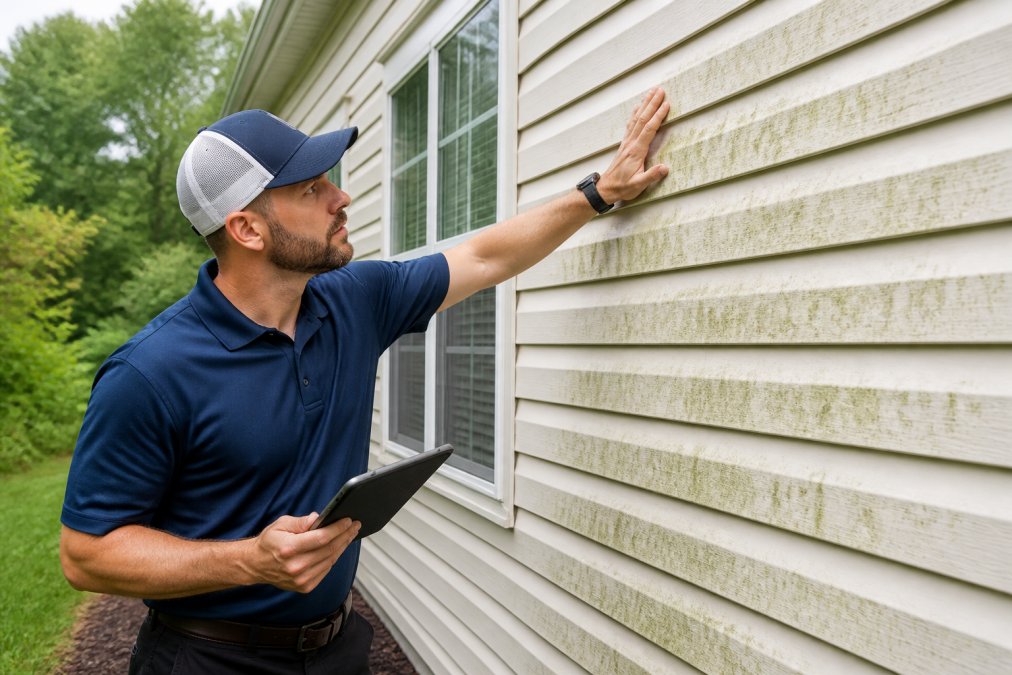
Set up equipment on level ground away from foot traffic. Verify all connections are tight and test equipment operation before starting work.
Mask sensitive areas: window seals, electrical outlets, HVAC units, and delicate landscaping to prevent property damage.
Application and Dwell Time
Apply soft wash solution from top to bottom to prevent dirty runoff from flowing over cleaned areas. Maintain consistent nozzle distance and speed for even coverage.
Dwell time (typically 15-30 minutes) is where chemistry works. Resist rinsing immediately, longer contact time dissolves biofilm and organic growth more effectively. Monitor the surface and reapply to stubborn spots if needed.
Watch for signs that the solution is working: color changes, visible breakdown of mold or algae, and surface darkening. These indicators confirm the chemistry is active. Patience during dwell time produces superior results and longer-lasting cleanliness.
Rinse Cycle and Post-Wash Care
After dwell time, rinse thoroughly with low-pressure water. Start from the top and work downward, ensuring complete chemical removal. Incomplete rinsing leaves residue that can affect appearance and surface integrity.
Post-wash care extends results. Inspect the cleaned surface for missed spots and reapply solution if necessary. Allow the surface to dry completely before allowing foot traffic or normal use. Most surfaces are dry within 24 hours, depending on weather.
Recommend preventive maintenance to the property owner. Periodic inspections and early intervention on new growth prevent buildup and extend the time between full cleanings. Many homeowners find that annual or bi-annual soft washing maintains their property's appearance effectively.
House Soft Washing Cost and Budget Considerations
Pricing for house soft washing depends on multiple factors specific to each property. Understanding what influences cost helps homeowners make informed decisions.
What Affects Pricing
Property size is the primary cost driver. Larger homes require more chemical solution, more labor time, and extended equipment setup. A 2,000-square-foot ranch costs less than a 5,000-square-foot two-story home.
Surface condition matters significantly. Heavily soiled surfaces with years of accumulated growth require longer dwell time, additional chemical applications, and more careful work. Lightly soiled properties clean faster and cost less.
Surface type affects complexity.
DIY vs Professional Soft Washing
DIY soft washing is possible but carries real risks. Equipment rental, chemical purchases, and safety gear add up quickly. Many homeowners discover that professional service costs less than they expected, especially when accounting for their time and the learning curve.
Common Mistakes and How to Avoid Them
Understanding what goes wrong helps homeowners avoid expensive errors and achieve better results.
Frequently Asked Questions
What is the best solution for soft washing a house?
The best soft wash solution depends on your surface and the contaminant. Sodium hypochlorite-based cleaners work well for algae and mold on most siding. Surfactant-enhanced solutions improve coverage and dwell time. For delicate surfaces like composite decking or painted wood, use gentler, biodegradable formulas. Always verify chemical compatibility with your specific surface before application to avoid damage or discoloration.
How often should you soft wash your home exterior?
Most homes benefit from soft washing every 1-2 years, depending on climate and exposure. In humid areas, algae and biofilm return faster, requiring annual cleaning. Shaded areas accumulate mold more quickly than sunny spots. Regular maintenance prevents buildup and extends the life of your siding, roof, and deck. Post-wash preventive treatments can extend the interval between cleanings.
Can I soft wash my house myself, or should I hire a professional?
DIY soft washing is possible if you understand chemical dilution ratios, safety precautions, and proper application techniques. However, mistakes, like incorrect PSI settings, improper chemical mixing, or inadequate rinsing, can damage surfaces or void warranties. Professionals have liability insurance, proper equipment, and expertise with surface-specific chemistry. For delicate surfaces like roofs or composite decks, professional service protects your property investment.
Is soft washing a house worth it?
Soft washing delivers significant value by removing stubborn organic growth like gloeocapsa magma, mold, and algae that pressure washing alone cannot eliminate. It restores curb appeal before listing, extends exterior surface life, and prevents long-term damage. Results typically last 1-2 years with proper maintenance. The cost-to-benefit ratio is highest for properties with visible staining, humid climates, or upcoming real estate transactions.