 ultimate-guide
Pressure Washing Services Near Me: 2026 Guide
Table of Contents
- Why Professional Pressure Washing Services Beat DIY
- Soft Washing vs Pressure Washing: Which Method Your Surface Needs
- Residential Pressure Washing Cost: What Actually Drives the Price
- How Often Should You Pressure Wash Your Driveway and Other Surfaces?
- Commercial Power Washing for Storefronts and Parking Lots
- How to Choose Pressure Washing Services Near Me
- Eco-Friendly Cleaning Agents and Runoff Rules
- Conclusion: Get Your Free Quote
- Frequently Asked Questions
Last Updated: September 14, 2026
Why Professional Pressure Washing Services Beat DIY
Renting a pressure washer for a weekend looks like a bargain until you see the results: etched stripes, a damaged finish, and a repair bill that dwarfs what a professional would have charged. That is why pressure washing services near me searches spike every spring. This guide from A2Z Wash Pros covers what separates a pro job from a rental-unit gamble, how to pick a provider, and what drives cost in 2026.
Most DIY damage traces back to one mistake: treating every surface like it can take full blast.
The Etched Concrete Problem
Etched concrete happens when a narrow, high-pressure stream moves too slowly, carving visible lines into the top layer that do not wash out.
Fixing it usually means grinding or resurfacing, far more expensive than the cleaning itself. Professionals avoid it with wider nozzles, controlled pressure settings, and consistent pass speed.
What a Pro Brings That a Rental Cannot
Equipment is only half the difference. A professional brings surface knowledge: which surfaces tolerate high-pressure water, which need chemical cleaning, and which should never see a pressure washer.
- Nozzle tips matched to the surface, not one tip for everything
- Pressure settings dialed down for siding, decks, and roofs
- Trained technique that keeps the wand moving at a steady rate
- Liability coverage if something does go wrong
Soft Washing vs Pressure Washing: Which Method Your Surface Needs
Soft washing and pressure washing are not interchangeable. Soft washing uses low pressure and specialized solutions to kill organic growth; pressure washing uses high-pressure water to blast away dirt and grime. The wrong method destroys shingles.
The soft washing vs pressure washing decision comes down to the surface:
| Surface | Recommended Method | Why |
|---|---|---|
| Concrete driveways | Pressure washing | Durable enough for high-pressure water |
| Roof shingles | Soft washing | High pressure breaks shingle granules |
| Vinyl and wood siding | Soft washing | Pressure forces water behind panels |
| Decks | Soft washing | Pressure splinters and strips stain |
| Parking lots | Pressure washing | Heavy oil stains need agitation |
Roof shingle cleaning is where this matters most. Those black streaks are algae feeding on limestone filler in the shingles. Soft washing kills the algae at the root; pressure washing tears the shingles apart and can void a manufacturer warranty.
Residential Pressure Washing Cost: What Actually Drives the Price
Residential pressure washing cost depends on surface type, square footage, buildup, and accessibility. There is no flat rate, and any provider quoting one without seeing your property is guessing.
Most quotes use one of two pricing models. Flat-rate pricing assigns a set price per surface (a standard two-car driveway, a single-story roofline, a defined run of siding). Square-foot pricing multiplies a per-square-foot rate by the measured area. Flat-rate is easier to compare across bids; square-foot pricing is more accurate on large or irregular properties. Ask which model a provider uses before comparing numbers, a flat-rate quote and a square-foot quote for the same driveway are not the same thing.
Four factors move the number most:
- Surface type. A driveway is straightforward. A two-story home with a steep roof takes more time, equipment, and care.
- Level of buildup. A surface cleaned two years ago comes back faster than one that has never been touched.
- Access. Fencing, landscaping, and tight side yards slow the work down.
- Method required. Soft washing takes longer than straight pressure washing because the solution needs dwell time.
How Providers Measure and Quote
A legitimate estimate starts with measurement, not a phone guess. Expect a provider to walk the property with a measuring wheel or laser distance meter, or pull dimensions from county appraisal district records and verify them on site. Square footage is then adjusted for obstacles: a parked trailer, a fenced side yard, or a deck with railing spindles all add labor that raw square footage does not capture.
Two add-ons show up on most residential invoices:
- Pre-treatment. Oil, rust, and heavy organic staining usually need a degreaser or a specialty remover applied before washing, with dwell time built into the schedule.
- Post-treatment. A second pass or a rinse-down of adjacent landscaping after soft washing.
What Changes the Price Between Two Similar Homes
Two houses on the same street can get quotes that differ widely. The usual reasons:
- Water source and access. A spigot on the far side of the house means more hose run and slower setup.
- Slope and drainage. A steep driveway holds runoff differently and may require containment.
- Surface condition. Cracked or spalling concrete needs lower pressure and more passes, not less.
- Scheduling window. Weekend and same-week appointments often carry a premium; off-season and midweek slots are usually cheaper.
- Bundle size. Combining driveway, walkway, siding, and gutters into one visit spreads setup and travel cost across more surfaces, which lowers the effective price per surface.
What to Ask Before You Compare Quotes
A quote is only comparable if it covers the same scope. Before lining up two bids, confirm each states:
- The pricing model (flat-rate or per square foot) and the measured area
- Which surfaces are included and which are excluded
- The method for each surface (pressure washing vs. soft washing)
- Whether pre-treatment and post-treatment are included
- Whether the price is firm or an estimate subject to change on site
For an accurate figure, request a no-obligation estimate. A2Z Wash Pros provides free quotes based on an actual look at your property, and the written scope lists the method and inclusions for every surface so you can compare bids line by line.
How Often Should You Pressure Wash Your Driveway and Other Surfaces?
Most driveways need cleaning every 12 to 18 months. In humid climates, that window shrinks: algae, mold and mildew treatment becomes a yearly routine, because organic growth returns faster when moisture stays on the surface.
A practical maintenance schedule looks like this:
- Driveways and walkways: every 12 months, or when you notice dark staining
- Roofs: every 18 to 24 months with soft washing
- Decks: annually, ideally before staining or sealing season
- Siding: every 12 to 18 months
- Gutters: twice a year, often bundled with siding cleaning
Preventative maintenance beats deep cleaning every time. A surface kept on a schedule never needs the aggressive treatment a neglected one does.
Commercial Power Washing for Storefronts and Parking Lots
Commercial power washing protects more than appearance. Clean pavement reduces slip risk from algae and oil, and a clean storefront signals a well-run business.
Commercial property cleaning typically covers:
- Parking lots, where oil stains and gum require degreasing and surface restoration
- Storefront exteriors, including awnings, entryways, and signage surrounds
- Dumpster pads, which collect grease and organic waste
- Sidewalks and walkways, where foot traffic grinds dirt into the surface
Scheduling matters: most commercial clients want work done before opening hours or on a low-traffic day so customers are not walking around wet pavement and equipment.
Property managers of strip malls in Galveston County often bundle storefronts and lots into one visit, cheaper than booking separately and keeps the whole property on one maintenance calendar.
How to Choose Pressure Washing Services Near Me
The right provider is licensed, insured, and willing to explain which method they will use on each surface before they start. If a company cannot answer that clearly, keep looking. What most ranking pages skip is how to verify those claims and compare two bids that look identical on the surface.
Verify Insurance and Licensing, Do Not Just Ask
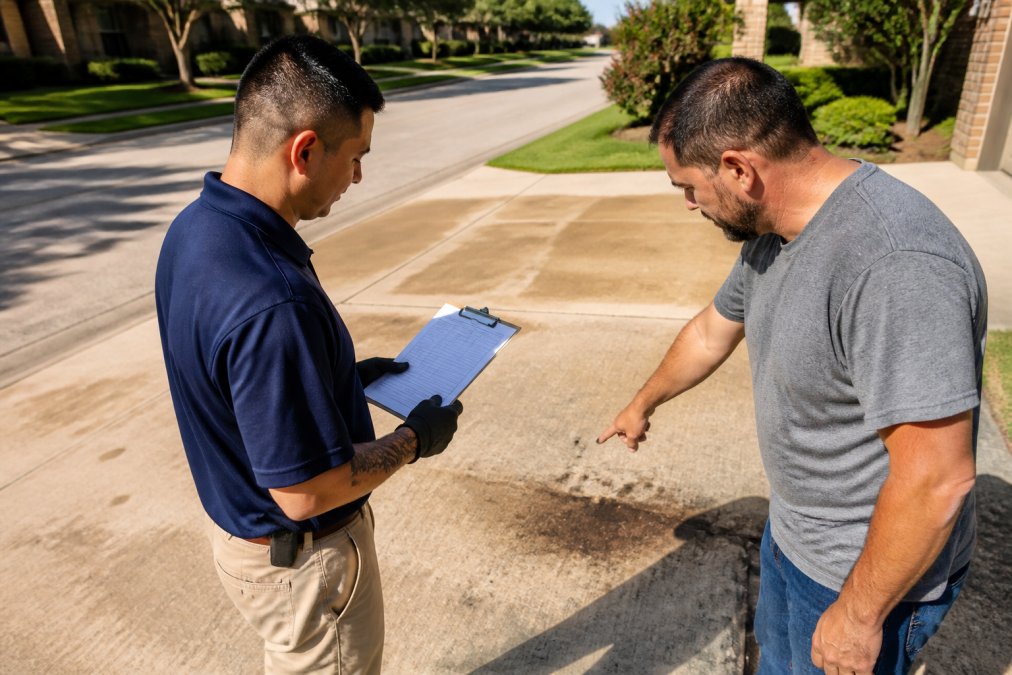
"Fully insured" is a phrase, not proof. Ask for the certificate of insurance (COI) and read three things: the general liability limit, the effective dates, and whether the policy is current. A COI that expired last month is not coverage. If the provider carries workers' compensation, that signals trained staff rather than day labor; if not, ask who pays if a worker is injured on your property.
Licensing for exterior cleaning varies by state and municipality. Some jurisdictions require a general contractor or specialty license for certain work, and many require a business license and, in some cases, a permit for discharge of wash water. Do not assume a license is required everywhere, or that a provider who claims one holds it. Ask for the license number and issuing authority, then verify it through the agency's public lookup.
The Bid-Comparison Framework
Two quotes for the same driveway can differ by hundreds of dollars and both be legitimate. The difference is usually scope, not price. Use this framework to normalize bids:
| Line item | What to confirm on each bid |
|---|---|
| Pricing model | Flat-rate or per square foot, and the measured area |
| Surfaces included | Driveway, walkway, siding, roof, gutters, deck, listed individually |
| Method per surface | Pressure washing vs. soft washing, stated surface by surface |
| Pre-treatment | Degreaser, rust remover, or organic treatment included or extra |
| Post-treatment | Landscaping rinse, second pass, or drain containment included |
| Water source | Whose spigot, and whether a water fee applies |
| Scheduling | Arrival window in writing, not "sometime Tuesday" |
| Damage terms | What happens if a surface is etched, stripped, or cracked |
A bid that is silent on method per surface is not comparable to one that specifies it. Fill the table for each provider and the cheapest quote often stops looking cheapest.
The DIY-vs-Pro Risk Assessment
Most pages tell you to hire a pro. Fewer explain what you risk by not hiring one. Run this assessment before you rent a machine:
- Surface damage. A zero-degree tip on concrete at full pressure etches the top layer in seconds, and the damage is permanent. Grinding or resurfacing costs far more than the cleaning itself.
- Etching and striping. Uneven pass speed leaves visible lines that do not wash out.
- Water intrusion. Pressure forced behind vinyl or wood siding traps moisture and can lead to rot and mold inside the wall cavity.
- Chemical burns. Many cleaning solutions are caustic or acidic. Without proper PPE, skin and eye injuries are common, and mixing the wrong chemicals can produce toxic gas.
- Electrical and utility risk. Water near exterior outlets, meters, and gas lines is a real hazard for an untrained operator.
- Warranty voiding. Pressure washing a roof can void the shingle manufacturer's warranty, which is a cost no rental fee reflects.
- Liability. If you damage a neighbor's property or a passerby slips on your wet driveway, you carry that exposure. A professional carries it for you.
If any of those risks apply to your property, and on most homes, several do, the math favors hiring. The rental fee is the smallest line in the comparison.
Read Reviews for Specifics, Not Stars
Reviews matter, but read them for specifics. A review that names the surface, the method, and the result tells you far more than a five-star rating with no detail. Look for reviews mentioning the same surface you need cleaned, and treat a cluster of identical-sounding reviews as a signal to dig further.
Use this checklist before you book:
- Ask whether they are fully insured and can provide a current COI
- Ask for the license number and verify it with the issuing agency
- Confirm they will soft wash any roof or siding, not pressure wash it
- Request photos or references from homes in your area
- Get the scope in writing: which surfaces, which method, what is excluded
- Confirm arrival windows in writing, not just "sometime Tuesday"
- Ask what happens if a surface is damaged, and get it in the contract
Eco-Friendly Cleaning Agents and Runoff Rules
What runs off your property matters. Cleaning solutions, oil residue, and organic matter all flow somewhere, and many municipalities regulate where that runoff can go.
Eco-friendly cleaning agents have changed how responsible providers work: biodegradable detergents break down instead of lingering, and plant-safe formulas reduce risk to nearby landscaping.
Three practices separate a careful provider from a careless one:
- Containment. Blocking storm drains before washing keeps runoff out of waterways.
- Water recovery. Some jobs, especially commercial lots, require capturing and disposing of wastewater rather than letting it run.
- Plant protection. Pre-wetting and rinsing nearby landscaping prevents cleaning solutions from burning foliage.
If a provider cannot tell you where their runoff goes, that is a red flag. Regulations vary by jurisdiction, so check your local rules for exterior cleaning discharge before you book.
Conclusion: Get Your Free Quote
The gap between a DIY rental and a professional job shows up in the results, and sometimes in the repair bill. Matching the method to the surface, controlling pressure, and knowing when to use chemical cleaning instead of force separates a restored driveway from an etched one.
A2Z Wash Pros handles residential and commercial exterior cleaning across Houston, Katy, and Hitchcock, with professional pressure washing services, soft washing for delicate surfaces, and expert cleaning for driveways, roofs, and decks. First-time customers receive 10% off their first service invoice, and every job starts with a free quote. Get started with A2Z Wash Pros and see your property restored.
Frequently Asked Questions
What is the average cost of pressure washing?
Pressure washing prices depend on square footage, surface type, and how much buildup has to come off. Driveways and walkways usually sit at the lower end, while roofs and multi-story siding run higher because they need specialized equipment and sometimes soft washing. A2Z Wash Pros does not publish flat rates because every property is different, so the fastest way to get a real number is to request a free quote and let them assess your surfaces in person.
What is the difference between power washing and pressure washing?
The terms get used interchangeably, but power washing typically involves heated water, which helps break down grease and oil on hard surfaces like concrete. Pressure washing uses unheated water at high PSI and works well for general dirt, algae, and grime. Many jobs combine both methods. For delicate surfaces like roof shingles or composite decks, soft washing with low pressure and cleaning solutions is the safer choice because it avoids the surface damage that high pressure can cause.
Is professional pressure washing safe for all exterior surfaces?
No single setting works on everything. Concrete driveways can handle high pressure, but asphalt shingles, painted wood, and composite decking need much lower pressure or a soft wash approach. That is why a trained technician adjusts pressure settings and nozzle tips for each material. If you have ever seen etched lines in concrete after a DIY job, that is what happens when pressure and technique are mismatched. A professional assessment before work starts prevents that kind of damage.
How long does it take before algae and grime come back?
In humid climates, algae and mildew can start reappearing on north-facing surfaces within six to twelve months, especially on roofs and shaded siding. A proper cleaning that includes an algae treatment slows regrowth compared to pressure alone. Many homeowners schedule annual cleanings to stay ahead of it, while driveways in full sun often hold up longer between services. If you are preparing to sell, a cleaning timed a few weeks before listing keeps the property looking its best through showings.