 how-to
Preventing Black Streaks on New Roof Shingles
Table of Contents
- Why New Roof Shingles Get Black Streaks
- Do Copper Strips for Roof Algae Actually Work?
- Prevention Step 1: Install Algae-Resistant Shingles Correctly
- Prevention Step 2: Add Copper or Zinc Strips Early
- Roof Cleaning Frequency: How Often to Wash Before Streaks Return
- Professional Roof Soft Washing vs. DIY Pressure Washing
- Common Mistakes That Cause Black Streaks on New Shingles
- What to Do Next
- Frequently Asked Questions
Last Updated: September 29, 2026
Why New Roof Shingles Get Black Streaks
Black streaks on a new roof are not dirt, and they are not a sign of bad shingles. They are algae, and they show up fastest in warm, humid places. This guide from A2Z Wash Pros explains how to stop them before they take over.
The streaks are a living organism called Gloeocapsa magma. It lands on your roof as an airborne spore. It feeds on the limestone filler inside asphalt shingles. Then it spreads, and it spreads fast.
That is the part most homeowners get wrong. They think the roof is dirty. So they scrub harder. Scrubbing does not kill algae. It just spreads it around.
The Role of Humidity and Shingle Type
Humidity is the fuel. Algae needs moisture to grow, and it needs it often. In a humid climate, a roof can stay damp for hours after rain or morning fog. That is enough to feed a colony.
Shingle type matters too. Standard asphalt shingles use limestone as a filler. Algae eats that filler. Shingles made with algae-resistant granules use copper-infused granules instead. Those granules slowly release copper, and copper kills algae on contact.
So the fix starts at the shingle, not the spray bottle. Pick the right shingle, and you remove the food source.
Do Copper Strips for Roof Algae Actually Work?
Yes, copper strips for roof algae work, but only when they are installed high on the roof and left alone. The strips release copper ions every time it rains. Those ions wash down the roof and kill algae in the water's path. A strip placed at the ridge protects everything below it.
The catch is placement. A strip tacked along the gutter does nothing. The water has already run past the problem. The strip has to sit near the top so the runoff carries copper across the whole slope.
Zinc strips work the same way. Both metals are sold as "algae strips" or "zinc strips" at most building supply stores. Neither one is a fast fix. Expect the copper to work over months, not days.
Prevention Step 1: Install Algae-Resistant Shingles Correctly
Algae-resistant shingles only work if the copper granules stay on the roof. The granules sit on the top surface of the shingle. Anything that scuffs that surface strips the protection.
Three habits protect the granules during install:
- Carry shingles, do not drag them across the ridge
- Avoid walking on new shingles in hot weather
- Keep bundles off the roof surface until you are ready to lay them
Manufacturers also require a specific nailing pattern for the warranty. Nail too high, and the shingle lifts. Nail too low, and you crack the seal. Either way, water gets in and the copper protection is wasted.
Prevention Step 2: Add Copper or Zinc Strips Early
Add strips during the re-roof, not after. Once the shingles are down, you are working on a finished surface. Installing strips later means walking the roof and risking scuffs.
The right time is right after the ridge cap goes on. Cut the strip into manageable lengths. Fasten it along the ridge so the copper sits above the top course of shingles.
A few practical notes:
- Run the strip the full length of the ridge
- Overlap sections slightly so no gap forms
- Use the fasteners the strip maker recommends
- Do not paint over the strip
Strips are cheap insurance. They cost far less than a full roof cleaning every couple of years.
Roof Cleaning Frequency: How Often to Wash Before Streaks Return
Most roofs in a humid climate need a wash every one to three years. The exact timing depends on shade, tree cover, and how much rain the roof gets. A roof under heavy tree cover stays damp longer, so it needs attention more often.
Watch for the early signs:
- Faint dark lines near the ridge
- A dull, gray-green tint on north-facing slopes
- Streaks that reappear within a season of cleaning
If streaks come back fast, the underlying algae was never fully killed. A surface rinse removes the stain but leaves the root. That is why the timing matters more than the method.
Professional Roof Soft Washing vs. DIY Pressure Washing
Soft washing is the only safe way to clean asphalt shingles. It uses low pressure and a cleaning solution to kill algae at the root. Pressure washing uses high pressure, and on a shingle roof that pressure destroys the granules.
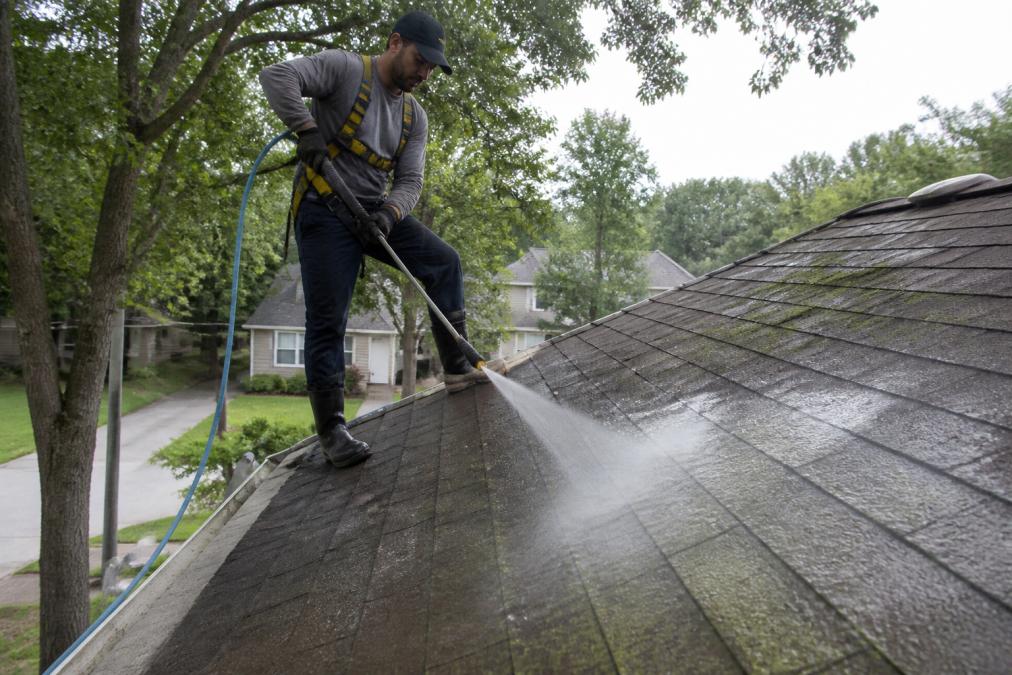
Here is the difference in plain terms:
| Method | Pressure Level | Effect on Shingles | Result |
|---|---|---|---|
| Soft washing | Low, garden-hose level | Gentle, no granule loss | Kills algae at the root |
| Pressure washing | High, 2,000+ PSI | Strips granules, voids warranty | Removes stain, damages roof |
The Asphalt Roofing Manufacturers Association guidance on roof maintenance is clear that high pressure damages shingles. It blasts the protective granules off the surface. Once they are gone, the asphalt underneath is exposed to sun and rain. The roof ages years in a single afternoon.
That is also why a DIY pressure washer is the wrong tool here. It can void your shingle warranty. Most manufacturers will not honor a claim if the roof shows pressure-washing damage.
Common Mistakes That Cause Black Streaks on New Shingles
The fastest way to grow black streaks is to clean the roof wrong. Here are the mistakes we see most often.
Pressure washing a shingle roof. This strips granules and opens the door for algae to take hold faster. The damaged surface holds moisture longer.
Using bleach at full strength. It kills the algae on top but can damage plants, siding, and metal flashing below. It also does not reach the root.
Cleaning only the visible streaks. Algae spreads from the ridge down. If you clean just the dark lines, the colony above them keeps feeding the problem.
Skipping the strips. A roof with no copper or zinc protection has no defense. Streaks return every season.
Ignoring the shade. Roofs under trees stay damp. Those roofs need cleaning more often, not less.
What to Do Next
Black streaks are a maintenance issue, not a roofing emergency. The fix is simple: kill the algae at the root, protect the roof with copper or zinc, and clean on a schedule.
That is where A2Z Wash Pros comes in. We handle professional roof soft washing for homes and businesses across Houston, Katy, and Hitchcock. Our team uses low-pressure soft washing that kills algae without stripping your shingles or voiding your warranty. We also offer a free quote, so you know the cost before we start. Rated 4.6 stars by local customers.
Get started with A2Z Wash Pros and keep your new roof looking new for years.
Frequently Asked Questions
What causes black streaks on new roof shingles?
Black streaks are caused by Gloeocapsa magma, a type of algae that feeds on limestone filler in asphalt shingles. It spreads fastest in warm, humid climates where moisture lingers on the roof. New shingles are not immune; in fact, their fresh limestone surface gives algae an easy food source. The streaks start as small dark spots and grow into full vertical stains within a few seasons if left untreated.
Do copper or zinc strips really prevent roof streaks?
Yes, when installed correctly. Copper strips for roof algae release metal ions that wash down the roof with rain, creating an environment where algae cannot grow. Zinc strips work similarly but deplete faster. For best results, install strips along the ridge line before streaks appear. They are a preventive measure, not a cure for existing heavy growth, so pair them with a professional roof soft washing if streaks are already visible.
How often should you clean a roof to prevent streaks?
Roof cleaning frequency depends on your climate and tree cover. In humid areas with frequent rain, plan on a professional soft wash every 12 to 24 months to stay ahead of algae. Homes surrounded by trees may need cleaning every 12 months. If you have copper strips installed, you can often stretch that interval to 24 to 36 months. Check your roof each spring and fall for early dark spots.
Will insurance cover roof cleaning for black streaks?
Most homeowner insurance policies do not cover routine roof cleaning because algae streaks are considered a maintenance issue, not sudden damage. However, if the algae has caused actual structural deterioration that your policy covers, some claims may be approved. Review your policy or call your agent before assuming coverage. Regular preventive maintenance, including soft washing and copper strips, is usually far cheaper than waiting for algae to damage shingles.