

What if the strongest blast is the wrong first move on a driveway oil stain? A dark mark can resist ordinary washing, but more pressure isn’t automatically safer for concrete. If you’re searching for “oil stain removal driveway Houston,” the right method depends on how deeply the oil has penetrated. A fresh spill near the surface calls for a different approach than an old stain absorbed into porous concrete.
Before using a cleaner or tool, consider the stain’s age and the driveway’s condition. The wrong approach can damage the surface or leave the mark visible. This guide explains how to respond to a fresh spill, clean concrete carefully, and set expectations based on the stain. You’ll also learn when DIY treatment has reached its limit and professional concrete cleaning from A2Z Wash Pros may be the practical next step for your Houston or Galveston property.
Key Takeaways
- Oil-stain results depend on how long the oil has been there, how much spilled, and the concrete’s condition.
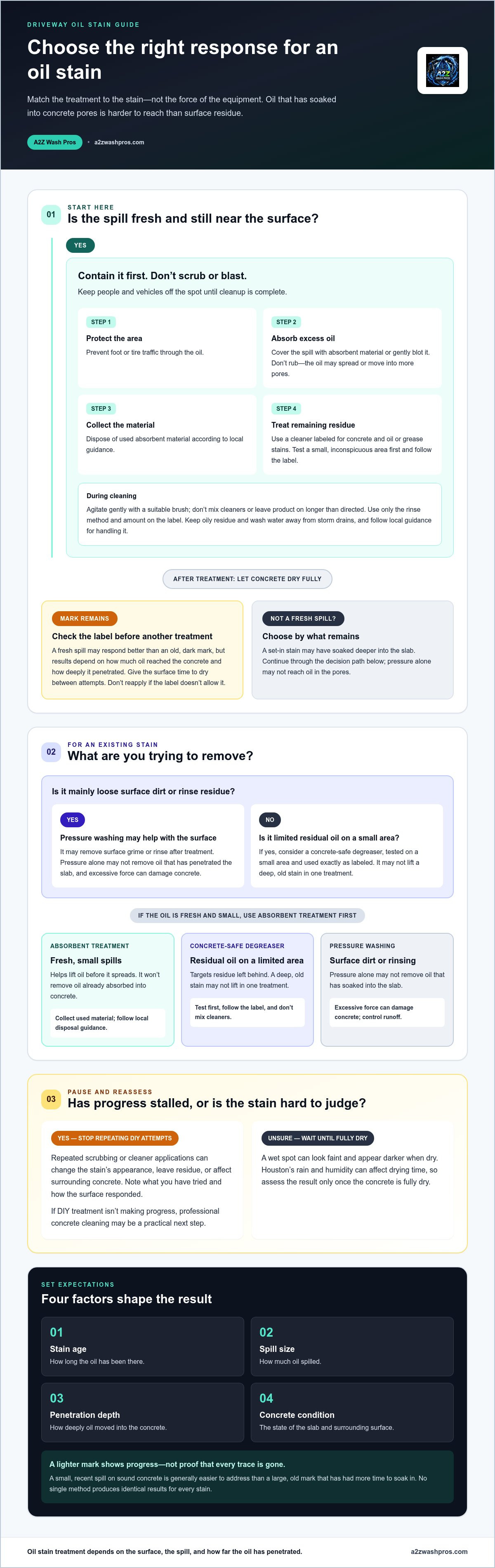
- For a fresh spill, protect the area, absorb excess oil, then use a concrete-safe cleaner according to its label.
- Choose between absorbent treatment, degreaser, and pressure washing based on the stain; pressure alone may not reach oil in concrete pores.
- Assess the stain only after the driveway dries, and avoid repeated DIY attempts if progress stalls.
- This guide to oil stain removal driveway Houston explains when A2Z Wash Pros’ professional concrete cleaning may be a practical next step.
Why Oil Stains Sink Into Houston Driveway Concrete
An oil stain isn’t always residue sitting on top of the driveway. Concrete has tiny pores and openings that allow liquid to move below the surface. Think of the slab as a hard, dense sponge: it doesn’t absorb like a household sponge, but its porous structure can let oil penetrate. For background on how concrete’s structure relates to wear and breakdown, see this overview of concrete degradation.
This distinction affects what cleaning can achieve. A fresh spill may leave more residue near the surface, where prompt absorbent treatment can help. A dark, set-in mark may have soaked deeper into the slab. Cleaning can lighten the visible stain without removing every trace below the surface. A spot can also look faint while wet, then appear darker once the concrete dries.
Why does oil leave a dark mark on concrete?
Oil can settle into concrete pores and discolor the area. Surface residue is still on top of the slab; absorbed oil is harder to reach because it has moved into the concrete. Ordinary rinsing may remove loose dirt and residue while leaving a shadow behind. A lighter mark shows progress, but it doesn’t prove every trace is gone.
What affects oil stain removal results?
Four factors shape the outcome: how long the stain has been there, how much oil spilled, how deeply it penetrated, and the condition of the surrounding concrete. A small, recent spill on sound concrete is generally easier to address than a large, old mark that has had more time to soak in.
Previous cleaning can make the stain harder to assess. Repeated scrubbing or cleaner applications may change its appearance, leave residue, or affect the surrounding surface. Before treating the area again, note what you’ve already tried and how the concrete responded.
Houston’s rain and humidity can affect how quickly a driveway dries. Allow time for the surface to dry before judging the result or moving to another treatment. Moisture can make a stain’s appearance misleading.
No single method produces identical results on every stain, because oil depth, stain age, spill size, and concrete condition all vary.
If you’re researching “oil stain removal driveway Houston,” assess the stain’s likely depth rather than focusing only on its darkest edge. That gives you a more realistic starting point and helps avoid unnecessary treatment of the surrounding concrete.
How to Treat a Fresh Oil Stain on a Driveway
Act promptly, but don’t rush into scrubbing or blasting the spill. A careful sequence helps contain fresh oil, protect the concrete, and limit the spread of residue. Keep people and vehicles off the spot until cleanup is complete.
What should you do immediately after an oil spill?
First, protect the area and prevent foot or tire traffic through the oil. Cover the spill with absorbent material, or gently blot it. Don’t scrub, because rubbing can spread oil across the concrete and push it into more pores. Once the material has absorbed the excess, collect it for disposal according to local guidance.
How should you clean the remaining mark?
After removing the excess oil, use a cleaner labeled for concrete and oil or grease stains. Follow its directions and test it on a small, inconspicuous area first. Research-based stain guidance, such as University of Illinois Stain Solutions, can offer additional context for treating oil marks.
- Apply carefully: Use the cleaner as directed. Don’t mix it with other products or leave it on longer than the label specifies.
- Agitate gently: Work the cleaner with a suitable brush, keeping the motion focused on the stain. Avoid vigorous scrubbing that carries residue outward.
- Rinse with control: Use only the rinse method and amount directed by the cleaner’s label. Keep oily residue and wash water from flowing toward storm drains, and follow local guidance for handling it.
- Let it dry: Check the result only after the concrete is fully dry. If the mark remains, follow the product directions before deciding whether another treatment is appropriate.
One pass may not be enough. A fresh spill is often more responsive than an old, dark mark, but results still depend on how much oil reached the concrete and how deeply it penetrated. Repeating a treatment too soon or layering products can complicate cleanup. Give the surface time to dry between attempts, and don’t reapply cleaner if the label doesn’t allow it.
For oil stain removal driveway Houston, safe runoff handling matters as much as the visible result. If DIY treatment isn’t making progress, A2Z Wash Pros provides professional driveway and concrete cleaning for Houston properties. Explore professional concrete cleaning as a practical next step.
DIY Degreaser or Pressure Washing: Which Oil-Stain Method Fits?
Choose a method based on the stain, not on how forcefully you can clean it. Absorbent material helps lift fresh oil before it spreads. A concrete-safe degreaser can target residue left behind. Pressure washing may remove surface grime, but pressure alone may not reach oil that has soaked into the slab. Excessive force can damage concrete, while uncontrolled rinsing can carry oily residue beyond the work area.
| Method | Best use | Key limitation | Safety note |
|---|---|---|---|
| Absorbent treatment | Fresh, small spills | Won’t remove oil already absorbed into concrete | Collect used material and dispose of it according to local guidance |
| Concrete-safe degreaser | Residual oil on a limited area | May not lift a deep, old stain in one treatment | Test a small area and follow the label; don’t mix cleaners |
| Pressure washing | Surface dirt and rinsing after treatment | Pressure alone may not remove penetrated oil | Avoid excessive pressure and control rinse water |
| Professional concrete cleaning | Broad, old, or persistent stains | Deep discoloration may remain | Cleaning intensity should suit the concrete’s condition |
When is a DIY oil-stain treatment worth trying?
DIY treatment makes sense for a small, recent spill on concrete that’s in good condition. Start with absorbent material, then use a cleaner labeled for concrete and oil or grease stains. Follow the label, test an inconspicuous spot, and let the driveway dry before judging the result. If the mark remains, don’t rush into another application or combine products. Controlled treatment and enough drying time help prevent surface damage and misleading results.
When is professional driveway cleaning the better next step?
Consider professional cleaning for an old, broad, recurring, or stubbornly dark stain, especially if careful DIY treatment hasn’t changed its appearance. A professional assessment can help match cleaning intensity to the concrete’s condition rather than relying on force alone. A2Z Wash Pros provides driveway and concrete cleaning for Houston properties, a practical next step when a stain resists homeowner treatment.
A cleaner-looking surface is a realistic goal; complete stain elimination isn’t guaranteed. For oil stain removal driveway Houston, choose a method based on the stain’s age and depth, then judge the dry result before deciding what to try next.
How to Set Realistic Expectations and Protect a Houston Driveway
A treated oil stain can look much lighter and still leave a shadow. That doesn’t automatically mean the cleaning failed. Oil that has moved deeper into concrete may remain visible after surface residue is gone. The stain’s age and depth matter, as does the slab’s condition. Older concrete, previous wear, or prior treatments can affect how evenly the area looks after cleaning.
Can an old oil stain be removed completely?
Cleaning can substantially improve the appearance of some stains, but complete removal can’t be promised. A shallow mark on sound concrete may respond differently from a long-standing stain that has penetrated deeper or sits on worn concrete. Judge the result on the actual surface, not by comparing it with another driveway or a single cleaning example.
Let the cleaned area dry fully before evaluating it. Water temporarily changes how concrete looks, so a wet spot can seem darker or blend in more than it will when dry. Compare the dry area with its original condition, using a photo taken before treatment if you have one. Look for overall improvement and changes in the stain’s edges, not just a temporary color shift.
How can you reduce future driveway oil stains?
Prevention starts with routine attention. Check the spots where vehicles regularly park for fresh drips or signs of a leak. If oil lands on the driveway, use absorbent material promptly to contain it before it spreads. Dispose of the used material according to local guidance.
Rinse carefully after cleaning. Keep cleaner residue and oily runoff from flowing toward nearby drains, and follow the product label and local guidance for handling wash water. Avoid forceful rinsing that pushes residue across the driveway or beyond the area being treated.
Houston weather shifts between rain, heat, and humid conditions. Check the driveway periodically, especially after wet weather or when you notice a new vehicle drip. Early attention gives you a better chance to address a fresh spot before it becomes a set-in mark. Include driveway checks in your regular exterior-maintenance routine.
For oil stain removal driveway Houston, start with a realistic goal: improve the appearance while recognizing that deep discoloration may remain. If a stain persists despite careful treatment, A2Z Wash Pros provides driveway and concrete cleaning for Houston and Galveston properties. Request an estimate for driveway cleaning.
Professional Oil Stain Removal in Houston: Your Next Step
DIY treatment may be enough for a small, fresh spill. If the stain is old, covers a broad area, keeps returning, or stays dark after careful cleaning, repeated attempts may not be the best next move. More scrubbing or pressure can put the surrounding concrete at risk without reaching oil that has penetrated the slab.
A2Z Wash Pros provides driveway and concrete cleaning for residential and commercial properties in Houston and the Galveston area. The veteran-owned business brings more than ten years of industry experience to exterior cleaning. Professional cleaning is a practical next step when a stain resists homeowner treatment, with the approach guided by the condition of the concrete rather than force alone.
What happens during a professional driveway-cleaning assessment?
The first step is assessing the concrete and the stain. Its size, appearance, and the surface’s condition help determine an appropriate cleaning approach. An older, deeply set mark can respond differently from a surface-level spill, and worn or damaged concrete may need more careful treatment. No single method fits every driveway.
Expect an assessment, not a promise that every trace will disappear. Cleaning may improve the driveway’s appearance, but results depend on the particular stain and concrete condition. Judge the surface after it dries, when its appearance can be compared fairly.
How can Houston property owners get an estimate?
If careful treatment hasn’t cleared the stain, or you’re concerned about damaging the slab with another attempt, request a free estimate for driveway or concrete cleaning. A2Z Wash Pros serves residential and commercial customers in Houston and the Galveston area. Sharing what you’ve already tried provides useful context about the surface and stain.
For oil stain removal driveway Houston, choose the approach that balances stain improvement with concrete care. A persistent mark doesn’t always call for another round of DIY chemicals or stronger pressure. A professional assessment can clarify what’s reasonable for your driveway before cleaning begins.
Request a free driveway-cleaning estimate
Take the Right Next Step for Your Driveway
Fresh oil responds best to prompt, careful treatment. Absorb excess first, use a concrete-safe cleaner as directed, and avoid aggressive pressure that can spread residue or harm the surface. For older stains, oil depth and concrete condition affect what cleaning can achieve. Check the driveway only after it dries, and keep expectations realistic: a stain may fade without disappearing completely.
If repeated DIY attempts aren’t delivering the improvement you want, professional cleaning can be a practical next step. A2Z Wash Pros offers residential and commercial concrete cleaning in Houston and the Galveston area. Veteran-owned and operated by Nolan Ginn III, the company brings more than ten years of industry experience to driveway care. For oil stain removal driveway Houston, start with a free estimate and a surface-specific assessment.
Request a free estimate for driveway cleaning. With a careful approach and realistic expectations, you can make a confident plan to improve your driveway.
Frequently Asked Questions
How do you remove fresh motor oil from a concrete driveway?
Absorb the fresh oil first, then clean the remaining mark with a product labeled for concrete and oil or grease stains. Cover or blot the spill with absorbent material without scrubbing it outward. Collect the used material for disposal according to local guidance. Follow the cleaner’s label, test an inconspicuous spot, and agitate gently with a suitable brush. Rinse carefully, then let the concrete dry before judging the result.
Can an old oil stain be completely removed from concrete?
Cleaning can substantially improve some old stains, but complete removal can’t be promised. Oil that has penetrated deeply may leave discoloration after surface residue is cleaned. The stain’s age and depth, the amount of oil, and the condition of the concrete all affect the result. Judge the driveway only after it dries. A lighter mark is a positive change, but it doesn’t necessarily mean every trace has been removed.
Does pressure washing remove oil stains from a driveway?
Pressure washing can remove surface dirt and help rinse a treated area, but pressure alone may not lift oil that has soaked into concrete pores. Excessive force can damage the surface, and uncontrolled rinsing can spread oily residue toward nearby drains. For better control, use a concrete-safe cleaner according to its label before rinsing. Choose a method based on the stain and concrete condition, not simply the highest pressure available.
What cleaner removes oil stains from concrete?
Choose a cleaner whose label specifically identifies concrete and oil or grease stains. Follow its instructions for application, agitation, and rinsing, and test a small, inconspicuous area first. A stronger product isn’t automatically more effective; unsuitable cleaners can affect the surface or complicate removal. Don’t mix cleaning products. If the stain remains after treatment and the concrete is dry, review the product directions before deciding whether another application is appropriate.
Will baking soda or cat litter remove a driveway oil stain?
Cat litter or another suitable absorbent can help soak up excess oil from a fresh spill. Baking soda may also absorb some surface oil, but neither should be expected to pull out oil that has penetrated deeply into concrete. Apply absorbent without scrubbing the spill outward, then collect and dispose of it according to local guidance. You may still need a concrete-safe cleaner for residue left behind.
How do you keep oil stain cleaner from reaching a storm drain?
Control the cleaning area before applying cleaner or rinsing. Use only the amount of water directed by the product label, and don’t let oily residue or wash water flow into nearby storm drains. Avoid cleaning when rain could carry runoff away, and contain or collect wash water where practical. Follow local guidance for handling cleaner residue and contaminated materials. If you can’t control runoff safely, stop and contact A2Z Wash Pros for professional concrete cleaning.
When should you hire a professional for oil stain removal in Houston?
Consider professional cleaning when a stain is old, broad, recurring, or still dark after careful DIY treatment, or when you’re unsure how to clean the concrete without damage. A2Z Wash Pros provides residential and commercial concrete cleaning in Houston and the Galveston area. Veteran-owned and operated by Nolan Ginn III, the company has more than ten years of industry experience and offers free estimates. Results depend on the stain and concrete condition.


