

How often should you wash your roof? There isn’t one date that works for every home. Houston-area homeowners may notice dark streaks and wonder whether cleaning is overdue, while worrying that washing could damage shingles or other roofing materials. The best timing depends on the roof’s condition, not an automatic yearly appointment.
Heat, humidity, and frequent rain can encourage visible growth, while shade and nearby trees may lead to buildup sooner. But inspecting a roof and washing it are different tasks. A visual check helps you notice changes; washing is worth considering when buildup is present and the roof can be cleaned safely with an approach suited to its material. This guide explains what to look for, how local exposure affects timing, and how to avoid unnecessary cleaning. Use it to decide whether your roof needs attention now or simply a closer look later.
Key Takeaways
- There’s no single schedule for how often should you wash your roof; let visible conditions guide the decision.
- Humidity, rainfall, shade, and nearby trees can affect how quickly buildup appears, but roofs respond differently.
- Recurring dark streaks or widespread growth may warrant assessment. A single mark or recent storm doesn’t automatically mean it’s time to wash.
- Track visible changes from the ground and check after significant storms without climbing onto the roof.
- When buildup returns or access is difficult, professional roof washing can help determine a careful next step.
How often should you wash your roof? Start with its condition
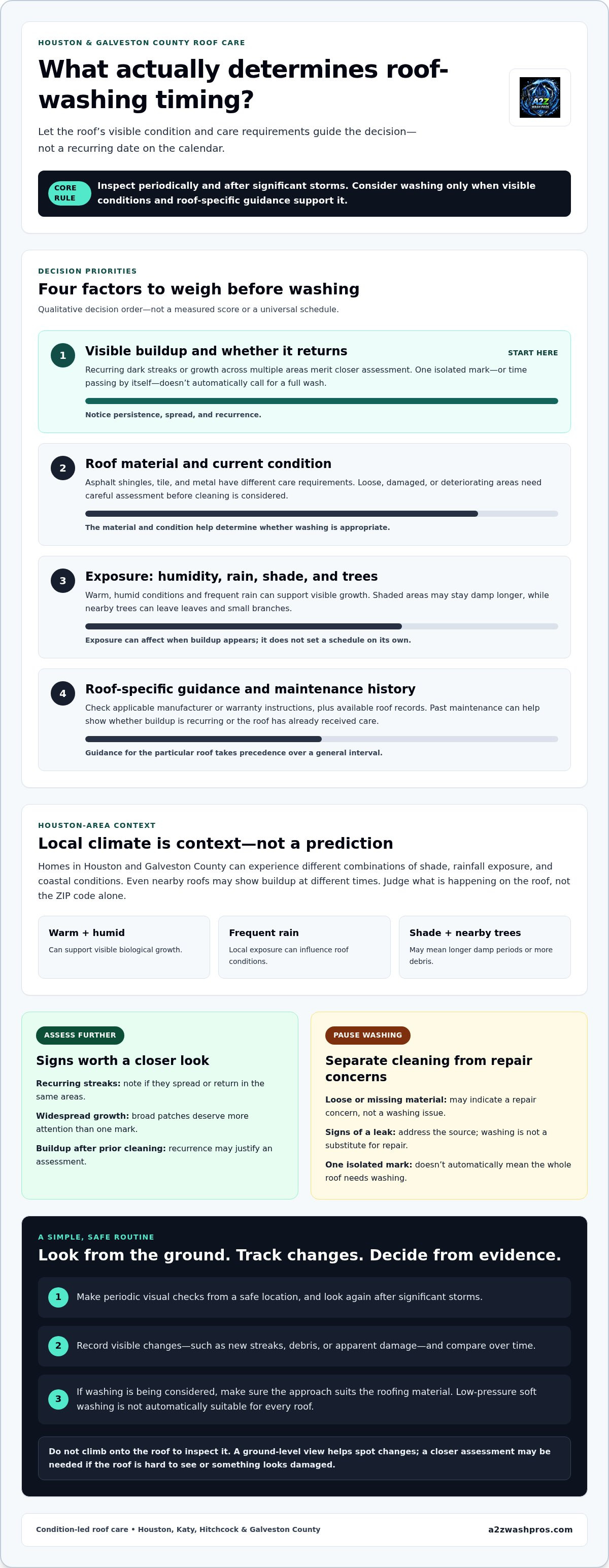
There’s no single washing interval that suits every roof. Timing depends on visible buildup, how quickly it returns, the roofing material, and any maintenance guidance for that roof. If you’re asking how often should you wash your roof, begin with its condition rather than a recurring date on the calendar.
A fixed schedule can lead to unnecessary cleaning. A roof that looks clear may not need washing, while recurring streaks or broader growth may call for closer assessment. If your roof warranty or roofing-material guidance specifies maintenance requirements, include those instructions in your decision. A general interval shouldn’t override advice for your particular roof.
Roof inspection frequency is not the same as washing frequency
Make periodic visual checks from the ground, and take another look after significant storms. Note changes you can see, such as new streaks, debris, or apparent damage. An inspection may show that the roof needs attention, but it may also show no reason to wash.
Don’t climb onto the roof to check it yourself. A ground-level view can help you spot changes, but it can’t replace a closer assessment when the roof is difficult to see or something looks damaged. Keep inspection and cleaning separate: looking for changes is routine care; washing is a response to the roof’s condition.
What a sensible roof-washing schedule looks like
Use a condition-led routine. Observe the roof from a safe location, record visible changes, and note whether buildup is recurring or widespread. Then decide whether an assessment makes sense. One isolated mark doesn’t automatically call for a full wash, and neither does the passage of time alone.
If cleaning is being considered, the method must suit the roofing material. The soft washing method uses low pressure, but no approach should be assumed suitable for every roof. The goal here is to decide when to assess washing, not to provide a step-by-step cleaning method.
Keep the schedule simple: inspect periodically and after significant storms; wash only when visible conditions and roof-specific guidance support it. This helps you respond to real buildup without turning roof care into unnecessary repeat cleaning.
What affects roof-washing frequency in Houston and Galveston County?
Houston and Galveston County roofs experience warm, humid conditions and frequent rain. Those regional conditions can support visible biological growth, but they don’t put every home on the same cleaning schedule. A roof’s exposure and condition matter more than its ZIP code alone.
Humidity, shade, trees, and coastal exposure
Roof sections shaded by trees or neighboring structures may stay damp longer after rain, creating conditions where stains or growth can become more noticeable. Nearby trees also drop leaves and small branches. Debris deserves attention, but it doesn’t automatically mean the roof needs washing.
A shaded home in Houston may show buildup sooner than a more exposed roof nearby. Properties around Hitchcock and elsewhere in Galveston County can also have different combinations of shade, rainfall exposure, and coastal conditions. Treat local climate as context, not a prediction. Look at what’s happening on your roof.
Roof material and condition change the decision
Cleaning must account for roofing material. Asphalt shingles, tile, and metal have different surfaces and care requirements, so don’t assume one approach fits all three. For asphalt roofing, the Asphalt Roofing Manufacturers Association outlines an industry-approved cleaning method. Follow the guidance for your specific roof rather than applying it automatically to other materials.
Age and wear matter, too. A roof with loose, damaged, or visibly deteriorating areas needs careful assessment before cleaning is considered. Roof pitch can affect how easily a surface sheds water and debris, while past maintenance can help explain whether buildup is recurring or whether the roof has already received care. Manufacturer instructions and available roof records are useful decision points.
Exposure affects when buildup may appear, but the roof’s material and condition determine whether washing is appropriate. If you’re weighing those factors, A2Z Wash Pros provides professional roof washing in Houston, Katy, Hitchcock, and the broader Galveston County area, with attention to protecting roofing materials.
When should you wash a roof, and when should you wait?
Visible staining can make a roof look overdue for cleaning, but appearance alone doesn’t confirm the cause or the right response. If you’re deciding how often should you wash your roof, treat recurring or widespread buildup as a reason to assess the roof, not an automatic instruction to wash it immediately.
Signs that a roof may need professional assessment
Look for changes from the ground. Persistent dark streaks, visible growth across multiple areas, or buildup that returns after prior cleaning can justify a closer assessment. These signs may point to a cleaning concern, but appearance alone can’t identify what’s happening beneath the surface.
- Recurring streaks: Note whether they’re spreading or returning in the same areas.
- Widespread growth: Broad patches deserve more attention than one isolated mark.
- Loose or missing material: Treat this as a possible repair concern, not simply a washing issue.
- Signs of a leak: Water entering the home calls for prompt attention to the source, not a roof wash as a substitute for repair.
Take photos from a safe spot on the ground and compare them over time. Don’t walk on the roof to get a closer look. If a change may involve damage, keep the cleaning decision separate from the repair assessment.
Reasons to pause before scheduling a wash
Damaged, aging, or fragile roofing needs careful evaluation before cleaning. Washing isn’t automatically better just because stains are visible. Repeated or unsuitable cleaning can put extra stress on roofing materials, so consider the cleaning method and the roof’s condition together. No single method is right for every material.
A recent storm also doesn’t automatically mean the roof needs washing. Check for visible changes from the ground and watch for possible damage. If the roof looks unchanged and there’s no persistent buildup, there may be no reason to schedule cleaning.
More frequent washing doesn’t guarantee a longer-lasting roof. The goal is to address genuine buildup while avoiding unnecessary work and protecting the material. For a focused comparison of cleaning approaches, read Soft Wash vs Pressure Wash Roof: Avoid Costly Damage. It explains why the method should be selected with the roof’s surface and condition in mind.
How to build a practical roof-maintenance routine for your home
A useful routine doesn’t put roof washing on autopilot. It helps you notice changes, compare them over time, and decide whether monitoring or a closer assessment makes sense. Keep the process simple and safe. You’re tracking the roof’s condition, not trying to diagnose or clean it yourself.
A simple seasonal roof check from the ground
Choose safe vantage points, such as the yard or a window, and look for visible changes. Pay extra attention to areas under trees or on shaded sections, where debris or recurring buildup may be easier to spot. Don’t climb onto the roof, even after a storm.
- Observe: Look for new streaks, visible growth, debris accumulation, or changes to roofing materials.
- Record: Note the date and take photos from the same ground-level spot when practical.
- Compare: Check whether a mark is isolated, spreading, or returning in an area that showed buildup before.
- Reassess after significant storms: Look for visible changes from the ground. If you suspect damage, arrange an appropriate assessment rather than attempting to inspect the roof yourself.
There’s no need to turn every observation into a cleaning appointment. A record gives you a clearer picture than memory alone and can help distinguish a lasting pattern from a one-time change.
Decide whether monitoring or washing is the next step
Before deciding how often should you wash your roof, consider what your notes show alongside the roof’s material, condition, nearby trees, shade, and manufacturer guidance. If the roof looks unchanged and there’s no recurring buildup, keep monitoring. If staining persists or growth appears widespread, a professional assessment can help determine whether washing is appropriate.
Don’t guess from a limited ground-level view when the roof is hard to see, appears fragile, or shows possible damage. Washing isn’t a substitute for addressing loose materials or leaks, and an unsuitable cleaning approach can harm roofing. Make a measured decision based on the roof, rather than starting a chemical-treatment or pressure-washing project without an appropriate assessment.
For Houston-area and Galveston County homeowners, A2Z Wash Pros provides roof washing with attention to the property’s condition. If your observations point to recurring buildup, request a roof-washing estimate and take a considered next step.
When professional roof washing makes sense in the Houston area
Professional roof washing makes sense when visible buildup keeps returning, the affected area is difficult to assess from the ground, or you’re unsure whether cleaning suits the roof’s material and condition. A professional assessment can help turn those observations into a practical next step. It can also help you avoid scheduling a wash simply because a certain amount of time has passed.
That distinction matters when considering how often should you wash your roof. There’s no fixed schedule that suits every property. Recurring streaks, shaded areas, nearby trees, and prior buildup can help explain what you’re seeing, but they don’t determine the right response on their own. The roof’s surface, visible condition, and relevant care guidance all matter.
What a professional assessment helps clarify
A closer assessment can help distinguish visible buildup from signs that may need a different kind of attention. A roof that’s difficult to see, appears worn, or has a history of recurring stains shouldn’t be judged by appearance alone. The roofing material and its condition should inform whether washing is suitable and which approach is appropriate.
This is especially useful when you can’t confidently tell whether the roof needs cleaning, when buildup appears across a broad area, or when getting a closer look would be unsafe for a homeowner. A careful evaluation puts roof protection ahead of routine cleaning.
Get a roof-washing estimate when the timing is right
A2Z Wash Pros is a veteran-owned exterior-cleaning company serving Houston, Katy, Hitchcock, and the broader Galveston County area. Roof washing is one of its services, with attention to precision and protecting the property. A free estimate gives you a chance to discuss the project and understand the proposed next step, without treating cleaning as an automatic recurring task.
If you’ve noticed persistent buildup or want a professional perspective before deciding, request a free roof-washing estimate from A2Z Wash Pros. Start with the roof’s condition, and choose washing only when it makes sense for the surface and the home.
Make roof care a measured decision
There’s no calendar date that fits every roof. The answer to how often should you wash your roof starts with its condition, visible buildup, roofing material, and exposure to shade and nearby trees. Check the roof from the ground periodically and after significant storms, but don’t mistake inspection for a reason to clean. Persistent staining or widespread growth may call for assessment; one isolated mark doesn’t automatically mean it’s time to wash.
Most importantly, avoid unnecessary cleaning. A careful, condition-based decision helps you address buildup while keeping the roof’s material and condition in view. If you’re unsure what your roof needs, A2Z Wash Pros provides roof washing for homeowners in Houston, Katy, Hitchcock, and Galveston County. A free estimate can help you understand the project before deciding on a next step.
Request a free roof-washing estimate from A2Z Wash Pros. Start with observation, not guesswork, and take the next step based on your roof’s condition.
Frequently Asked Questions
How often should you wash your roof in a humid climate?
In a humid climate, wash your roof when its condition shows cleaning is warranted, not on a fixed calendar. Houston’s heat, humidity, and rain can support visible buildup, while shade and nearby trees may affect how quickly it appears on a particular roof. Check from the ground for recurring streaks or widespread growth. Roof material, age, and manufacturer guidance should also inform the decision.
Is it necessary to wash a roof every year?
No, yearly roof washing isn’t necessary for every home. A roof that stays clear may not need cleaning, while a shaded roof with recurring buildup may need attention sooner. Separate routine visual checks from washing: inspect periodically and after significant storms, then decide based on visible conditions and roof-specific care guidance. Washing without a clear need can mean unnecessary work and added stress on roofing materials.
Can roof washing damage shingles?
Yes, an unsuitable cleaning method can damage shingles. High-pressure washing can dislodge protective granules or otherwise stress the roofing surface, so pressure shouldn’t be treated as a one-size-fits-all solution. The roof’s condition and manufacturer instructions matter before any cleaning. If shingles appear worn, loose, or damaged, pause and seek an appropriate assessment rather than attempting to wash the surface yourself.
How do you know when your roof needs washing?
Recurring dark streaks or visible growth across a broad area may be reasons to have the roof assessed. A single mark doesn’t automatically mean the whole roof needs washing, and appearance alone can’t confirm the cause. Take photos from the ground and compare them over time. If you also notice possible damage, loose materials, or signs of a leak, treat those as separate concerns, not cleaning signals.
Does rain clean a roof or remove algae?
Rain may rinse away loose dust or debris, but it doesn’t reliably remove established algae or recurring stains. If streaks remain after rainfall or return in the same areas, note the pattern and consider an assessment. Don’t assume a wet roof is clean or that rain has solved a growth problem. Avoid climbing up to check; observe from a safe location on the ground.
What time of year is best for roof washing in Houston?
No single season is best for every Houston roof. Weather on the day matters more than a calendar month: a dry, overcast, cooler day can be preferable when conditions allow. Extreme heat may cause cleaning solutions to evaporate too quickly, while rain can wash them away before they work. The roof’s material and condition still guide whether washing is appropriate at all.
Should you wash a roof after a storm?
Not automatically. After a significant storm, check the roof from the ground for visible changes, such as displaced materials or debris, but don’t climb up to inspect it. Storm damage and roof washing are different issues. If you suspect damage, arrange an appropriate assessment before considering cleaning. If the roof looks unchanged and there’s no persistent buildup, a storm alone isn’t a reason to wash it.


