
What good is a cleaner parking lot if the process risks pavement damage or sends dirty runoff toward storm drains? Oil, tire marks, gum, mildew, and embedded grime can make a busy property look neglected. A well-planned parking lot power washing Houston service considers the pavement, the stains, water management, and the property’s daily operations.
It’s reasonable to expect a visible improvement without unnecessarily restricting customer access, deliveries, or parking. The method should suit the contaminants and pavement, and the work plan should fit the site’s operating schedule. A one-size-fits-all wash can miss important areas or apply the wrong approach to a stubborn stain.
This 2026 buyer’s guide explains how to compare cleaning methods, protect paved surfaces, plan around drainage, and limit disruption. You’ll also learn how to set priorities and cleaning frequency, from broad parking areas to related concrete cleaning and gum removal. A2Z Wash Pros is a veteran-owned exterior cleaning company serving Houston, Galveston, and the surrounding area, with commercial parking lot cleaning tailored to the property.
Key Takeaways
- Match pressure, water flow, temperature, pretreatment, and equipment to the pavement and stains instead of relying on maximum pressure.
- Define the scope by identifying parking rows, entrances, pedestrian routes, and concrete areas that need focused attention.
- Plan parking lot power washing Houston around tenants, deliveries, parking access, and pedestrian movement to limit disruption.
- Set priorities based on visible buildup, including gum and stained concrete near customer routes.
- Review the finished work against the agreed priorities so the cleaning plan supports a more presentable property.
Why Houston Parking Lot Power Washing Matters for Commercial Properties
A commercial lot needs to present the property well, provide clear routes for customers and deliveries, and remain manageable to maintain. Oil spots, tire marks, gum, mildew, and tracked-in dirt can undermine all three. A stained entrance or grime-covered walkway can make an otherwise well-kept business look neglected before a customer reaches the door.
Commercial parking lot power washing removes accumulated surface contamination from paved areas to improve their appearance and support routine property upkeep. The goal isn’t to blast every surface with maximum force. Effective pressure washing uses equipment and a method suited to the cleaning task and the surface being treated.
Houston’s heat and humidity, seasonal rain, and steady vehicle traffic expose pavement to changing conditions and ongoing use. Cars and trucks can leave rubber marks and fluid spots. Rain can move dirt across the lot, and damp areas may develop mildew. Properties in Galveston and the surrounding coastal area also face regular exposure to weather and vehicle traffic. Since buildup returns with use, assess the lot’s actual condition rather than assuming every visit needs the same scope.
Which parking lot problems does power washing address?
Loose dust and tracked-in dirt differ from deposits bonded to the pavement. A broad wash can address general surface grime, while localized oil or grease may need targeted pretreatment. Gum often needs focused removal, and tire rubber can leave dark marks that call for a suitable cleaning approach. Results depend on the contaminant, pavement condition, and method. Include entrances and walkways in the assessment because they connect the parking area to the business.
Why does lot condition matter to Houston businesses?
Customers form an impression as they enter the property. A maintained lot supports a cleaner, more professional presentation; visible spills, dark tire marks, and ground-in dirt can send the opposite message. Buildup can also make busy routes look uncared for, drawing attention to areas managers may otherwise overlook.
Washing is one part of pavement upkeep, not a cure-all. It doesn’t replace pavement repairs or guarantee safer walking conditions. A practical assessment identifies where grime is concentrated, which areas matter most to daily access, and where concrete cleaning or gum removal can help create a more consistent appearance across the property.
How to Choose a Parking Lot Power Washing Method in Houston
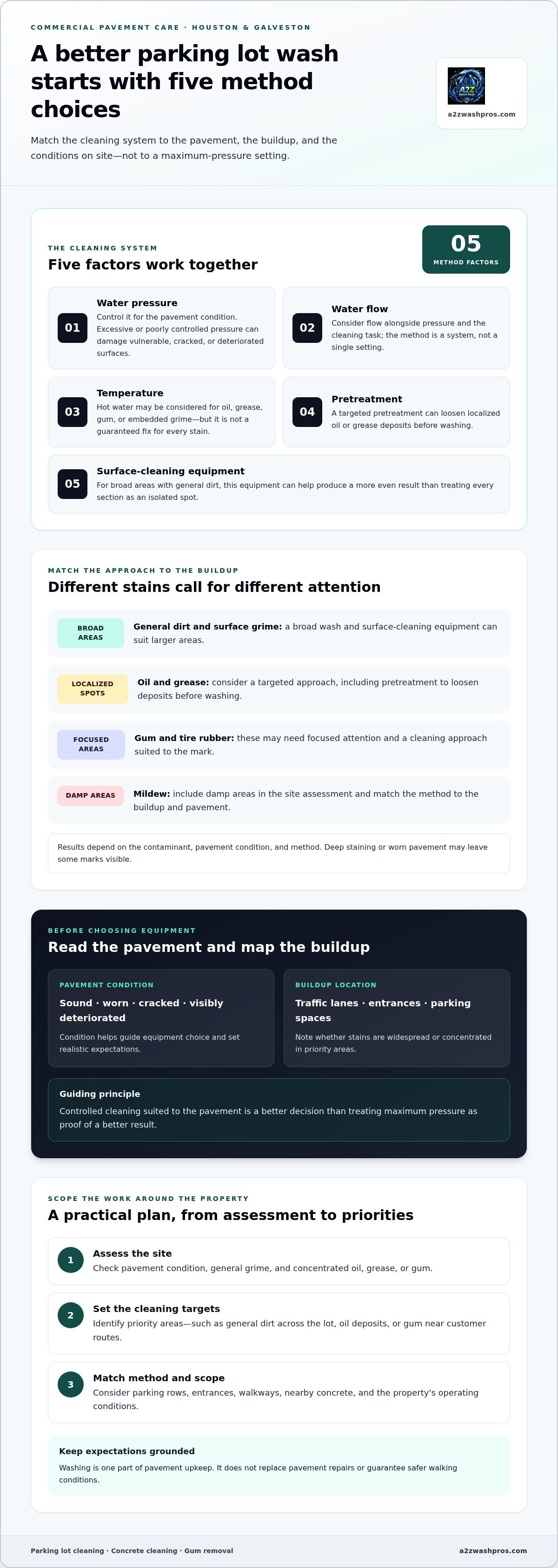
A strong cleaning plan is a system, not a pressure setting. Water pressure, flow rate, temperature, pretreatment, and surface-cleaning equipment work together. The right approach depends on the pavement, the buildup, and conditions at the site.
For broad areas with general dirt, surface-cleaning equipment can help produce a more even result than treating each section as an isolated spot. Oil and grease need a more targeted approach. Pretreatment can loosen localized deposits before washing, while gum and rubber marks may need focused attention. Matching the process to the contamination helps avoid spending time on an area with a method that is not suited to the stain.
Assess the pavement before choosing a method. Is it sound, worn, cracked, or visibly deteriorated? Are stains spread across traffic lanes, concentrated near entrances, or clustered around parking spaces? These observations help guide equipment choice and set realistic expectations. For a Houston or Galveston property, parking lot power washing should be planned around the pavement and buildup, not a one-size-fits-all setting.
Does high pressure damage parking lot pavement?
It can. Excessive or poorly controlled pressure may damage vulnerable, cracked, or deteriorated surfaces. Not every concrete lot can tolerate the same treatment. Surface condition, technique, and equipment all matter. Controlled cleaning suited to the pavement is a better decision than treating maximum pressure as proof of a better result.
Site planning also includes worker protection. OSHA provides guidance on Personal Protective Equipment requirements, a relevant reference for protective measures during work with equipment and cleaning agents.
When do hot water and pretreatment make a difference?
Hot water is one option in a cleaning system, not a guaranteed fix for every stain. It may be considered alongside pretreatment for oil, grease, gum, or embedded grime. The choice depends on the contaminant and pavement condition. Some marks may remain visible, especially when staining is deep or the surface is worn.
Before service, identify priority areas and the buildup to address. This gives the cleaning plan a clear target, whether that’s general dirt across the lot, localized oil deposits, or gum near customer routes. Learn more about A2Z Wash Pros parking lot cleaning and how the work can be scoped around your property’s pavement and cleaning needs.
What a Complete Houston Parking Lot Washing Service Should Cover
A clear scope prevents missed areas and mismatched expectations. Before work begins, identify the lot sections that matter most, note concentrated stains, and distinguish the main parking area from nearby surfaces. A2Z Wash Pros provides commercial parking lot cleaning, along with concrete cleaning and gum removal, so entrances and customer routes can be considered alongside parking rows.
Use these stages to organize the project:
- Inspect: Note pavement condition, general grime, and concentrated oil, grease, or gum deposits.
- Plan access: Identify parking rows, entrances, pedestrian routes, and any areas that need to remain open.
- Treat and clean: Match focused stain treatment and broad surface cleaning to the agreed priorities.
- Review: Walk the treated areas and compare the result with the original scope.
Include drainage in site planning. Wash water can carry dirt and residue toward drains, so the work plan should account for nearby drainage. Houston Public Works describes Houston's critical drainage infrastructure, an important local consideration when planning exterior cleaning in Houston. For properties in Galveston, consider the site’s own drainage layout when defining the cleaning plan.
Which areas should managers include in the cleaning scope?
Start with customer-facing entrances and high-traffic routes. Add parking rows and pedestrian paths, then flag visible buildup for detail work. Gum near doorways and oil spots in specific stalls may need separate attention from general surface cleaning. Keep an open-lot cleaning scope distinct from a dedicated parking garage cleaning project.
- Core lot: Parking rows, drive lanes, and primary entrances.
- Priority details: Gum, oil, grease, and other concentrated stains.
- Adjacent surfaces: Walkways and visibly affected concrete, included where they support the lot’s cleaning goals.
How can managers assess the finished work?
Review the areas named in the scope, not just the easiest sections to see. Check entrances, high-traffic routes, and each designated detail area. Compare the cleaned pavement with its starting condition and the agreed priorities. Some old stains may remain, especially where contamination has penetrated the surface or pavement is damaged. A useful review focuses on the work completed, not a promise that every mark will disappear.
A well-defined scope makes parking lot power washing easier to manage: it gives the cleaning team clear priorities and gives property managers a practical way to assess the result.
How to Schedule Parking Lot Power Washing Around Houston Operations
A well-planned cleaning window protects access and aligns the work with the property’s daily demands. Build the schedule around business hours, tenant needs, delivery routes, available parking, and pedestrian access. For Houston and Galveston properties, weather can also affect site conditions and the timing of exterior work. Leave room to adjust the plan if conditions change.
What should a property manager do before service?
Use a simple sequence to prepare the site and communicate changes clearly:
- Define the scope. Identify the parking sections, entrances, walkways, and priority stains included in the work.
- Map access. Note delivery routes, pedestrian paths, tenant entrances, and areas that need to remain available.
- Communicate changes. Tell tenants, staff, and customers which spaces or routes will be temporarily affected and when access is expected to change.
- Prepare the area. Move vehicles and movable obstacles where practical. Identify sensitive nearby surfaces, landscaping, or other areas that need consideration during cleaning.
- Review the work. Compare completed areas with the agreed priorities and note any remaining concerns.
Clear instructions reduce confusion. For example, if deliveries rely on one entrance, mark that route as a priority in the plan and coordinate how vehicles and pedestrians will move around the active work area.
Consider drainage before work begins. Rain and storm drains make it important to plan how wash water and debris will be managed on site. Account for the property’s drainage layout and applicable requirements when preparing the work plan.
How often should a Houston parking lot be washed?
Set frequency by conditions, not a universal calendar. Consider vehicle and foot traffic, how quickly visible buildup returns, property use, and the areas that matter most to presentation. A busy retail or event site may need a different schedule from a low-use property. Reassess after seasonal changes, heavier use, or a noticeable increase in oil, gum, or tracked-in dirt.
Regularly reviewing the lot helps managers adjust the schedule before buildup becomes the defining feature of customer-facing areas. Plan your Houston parking lot cleaning around your property’s access needs, priority areas, and operating schedule.
Book Parking Lot Power Washing in Houston with A2Z Wash Pros
A useful service plan starts with the property, not a preset routine. Consider pavement condition, the type and location of buildup, priority areas, access needs, and the schedule that works for your operation. This information helps define a clear scope for parking lot power washing that Houston businesses can plan around.
A2Z Wash Pros is a veteran-owned Houston-area provider of commercial parking lot cleaning, operated by Nolan Ginn III. The company brings over ten years of industry experience and provides free estimates. Its 24/7 operations support planning around varied business needs, while the work plan is tailored to the property’s scope and access requirements.
What to include when requesting a free estimate
Useful details help define a property-specific scope. Share what you know about the site and what needs attention:
- Location and layout: Provide the property location and a general sense of the lot’s size, sections, entrances, and walkways.
- Cleaning priorities: Identify oil spots, gum, tire marks, general grime, or heavily used routes that need focused attention.
- Access needs: Note tenant or customer access, delivery routes, parking availability, pedestrian paths, and any areas that must remain open.
- Schedule preferences: Describe business hours and preferred scheduling windows so the plan can account for daily operations.
These details help distinguish broad surface cleaning from localized stain treatment and related concrete cleaning or gum removal. They also make expectations clearer before work begins.
Why work with a veteran-owned Houston-area cleaning company?
Local property conditions and operating demands call for a practical, accountable approach. A2Z Wash Pros serves commercial properties in Houston, Galveston, and the surrounding area with parking lot cleaning and related exterior cleaning services. The company is veteran-owned and operated by Nolan Ginn III, with over ten years of industry experience. The cleaning process is planned around the agreed areas, access needs, and priorities.
Ready to define the right scope for your property? Request a free estimate for parking lot cleaning tailored to your site’s surfaces, buildup, and operating schedule.
Put a Clear Cleaning Plan in Motion
A cleaner commercial lot starts with a method matched to the pavement and buildup. Set clear priorities, include customer-facing entrances and high-traffic routes, and plan access around deliveries, tenants, and business hours. A thoughtful parking lot power washing plan for Houston and Galveston properties also accounts for site conditions and sets realistic expectations for old stains or damaged pavement.
A2Z Wash Pros is a veteran-owned Houston-area cleaning company operated by Nolan Ginn III. The team brings over ten years of industry experience, provides free estimates, and operates 24/7. Share your lot’s surface condition, problem areas, access needs, and preferred schedule to help shape a property-specific scope.
Ready to improve the appearance of your paved areas? Request a free parking lot washing estimate and take the next step toward a cleaner, better-presented property.
Frequently Asked Questions
How often should a commercial parking lot in Houston be power washed?
Set the frequency based on traffic, visible buildup, property use, and maintenance priorities. A busy retail center or event venue may need attention more often than a low-use commercial property. Watch for recurring oil spots, gum, tire marks, and grime along entrances or heavily used routes. Reassess the schedule as conditions change instead of relying on the same monthly or quarterly interval for every Houston lot.
Can parking lot power washing remove oil stains and tire marks?
It can reduce visible oil stains and tire marks, but results depend on how deeply contamination has set, the pavement’s condition, and the cleaning method. General surface cleaning may not be enough for concentrated oil or grease; targeted pretreatment may help loosen those deposits. Tire rubber can also need focused treatment. Older or deeply embedded stains may remain visible, so set priorities and expectations before work begins.
Will power washing damage concrete parking lot pavement?
It can damage vulnerable or deteriorated concrete if pressure is excessive or poorly controlled. A suitable approach considers pavement condition, equipment, and technique instead of relying on maximum pressure. Cracks, worn patches, and previous surface damage deserve attention during planning. Not every concrete lot should receive the same treatment. The cleaning method should match the surface and buildup to help protect the pavement during service.
What should a business do before its parking lot is cleaned?
Identify the areas to be cleaned, note priority stains, and plan how vehicles, deliveries, and pedestrians will move around the work. Tell tenants, staff, or customers about temporary access changes. Move vehicles and other movable obstacles where practical. Flag sensitive nearby areas and entrances that need to stay accessible. A clear scope and communication plan help the cleaning team focus on the agreed priorities.
Can a parking lot be power washed without closing the entire business?
Often, the work can be planned around access needs, but whether the entire lot can remain open depends on its layout and scope. Dividing the lot into sections may help preserve access to selected parking spaces, entrances, or delivery routes while other areas are being cleaned. Managers should coordinate the plan with tenants and staff, communicate temporary restrictions, and account for pedestrian movement.
How does rain affect parking lot power washing in Houston?
Rain can affect timing and site conditions, so the work plan may need to account for the forecast and drainage. Wet pavement can also make it harder to assess the cleaned surface immediately. Before service, identify nearby storm drains and plan how water and loosened debris will be managed. Houston and Galveston properties should account for local drainage conditions and applicable requirements.
What does a parking lot power washing estimate depend on?
An estimate depends on the property’s size and layout, pavement condition, type and extent of buildup, priority areas, and access or scheduling needs. Oil spots, gum, heavily used routes, entrances, and adjacent concrete can affect the scope. To plan parking lot power washing in Houston, share the property location, lot layout, main cleaning concerns, operating hours, and any delivery or pedestrian access restrictions when requesting a free estimate.


