

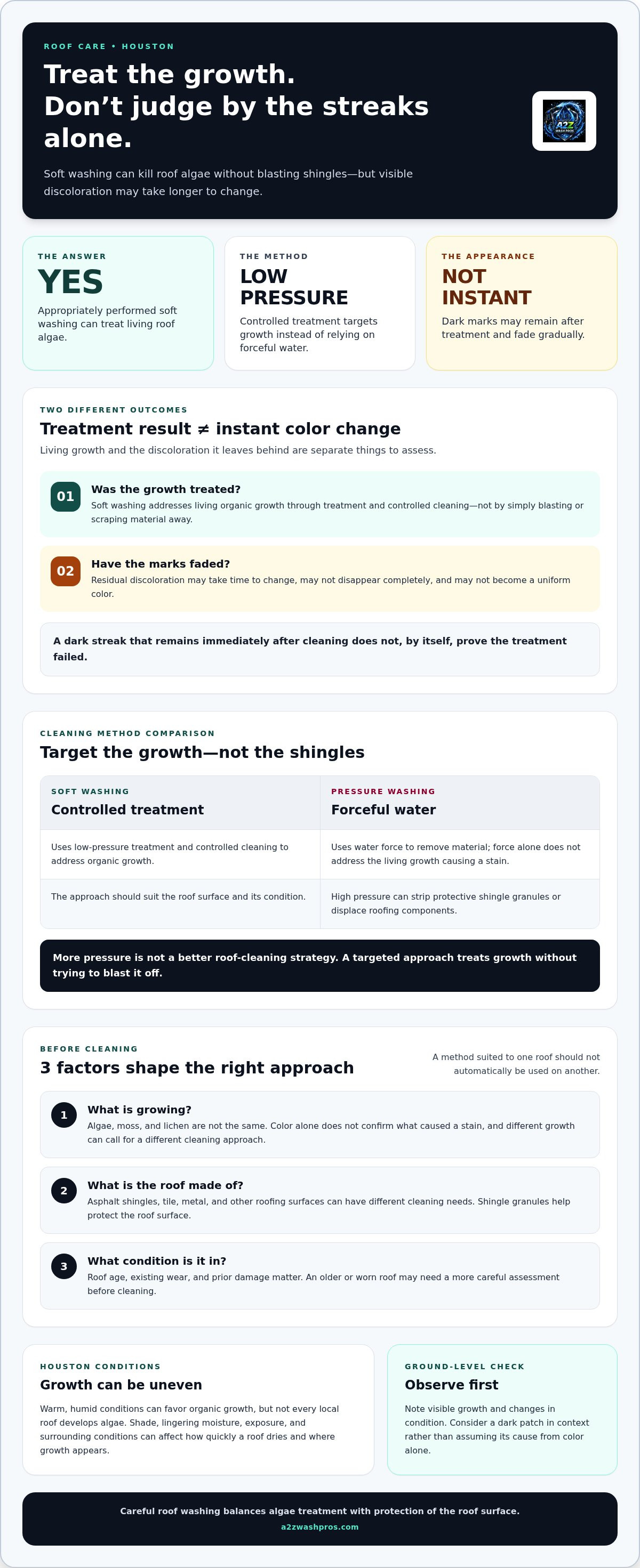
Soft washing can kill roof algae without blasting shingles, but the roof may not look clean immediately after treatment. The answer to “does soft washing kill roof algae” is yes: low-pressure cleaning targets the growth instead of relying on forceful water that can strip protective shingle granules. But killing algae and clearing every dark streak aren’t the same thing. Some discoloration may remain after treatment and fade gradually.
That difference can leave Houston homeowners wondering whether a roof was properly cleaned or whether the stains were simply covered up. It’s also easy to mistake algae for moss or lichen, which can call for a different cleaning approach. The right process starts with identifying the growth and considering the roof’s condition, then cleaning without putting the shingles under unnecessary stress.
This guide explains how soft washing affects roof algae, why visible marks may take time to fade, and what to look for when assessing a roof. You’ll also learn how to distinguish algae from moss and lichen, and why a careful roof-washing approach can help protect your shingles while improving your home’s appearance.
Key Takeaways
- Does soft washing kill roof algae? Properly performed soft washing can treat algae without using forceful water pressure on shingles.
- Lingering dark streaks don’t automatically mean treatment failed. Judge visible changes separately from whether algae was treated.
- More pressure isn’t a better cleaning strategy. Excessive force can strip protective shingle granules.
- Start by observing the roof from the ground. Note visible growth and changes in condition, and distinguish cosmetic streaks from signs that may need closer assessment.
- Careful roof washing can improve a Houston home’s appearance while helping protect its shingles.
Does Soft Washing Kill Roof Algae? The Direct Answer for Houston Homeowners
Yes, appropriately performed soft washing can kill roof algae. But does soft washing kill roof algae and instantly erase every dark streak? Not necessarily. Soft washing can treat living growth, while dead algae and the discoloration it leaves behind are separate issues. Stains may remain visible after treatment, so their immediate appearance doesn’t tell the whole story.
The result depends on what’s growing, the roof material, and the roof’s condition. Algae, moss, and lichen aren’t the same, and an older or worn roof may need a more careful assessment before cleaning. Forceful water can put shingles and their protective granules at risk, so the cleaning approach should address the growth without relying on high pressure.
What does it mean to kill roof algae?
Treating algae means addressing living growth on the roof surface, not simply pushing or scraping material away with water pressure. The dark streaks commonly associated with roof algae are often linked to Gloeocapsa magma, a cyanobacterium. Identifying the growth matters because color alone doesn’t prove what caused a stain. Even after algae is treated, residual discoloration may take time to change or may not disappear completely.
Why Houston-area homeowners see dark roof streaks
Houston’s warm, humid conditions can be favorable to organic growth, though not every local roof will develop algae. Streaks may be more noticeable where shade and lingering moisture affect how quickly a roof dries. Exposure and surrounding conditions also matter, so growth can appear unevenly across one roof. Assess a dark patch in context instead of assuming it is algae based on color alone.
For homeowners, the practical distinction is simple: treatment results and cosmetic results aren’t always identical or immediate. A roof that still shows discoloration may have had algae treated, while an unexpected change in the roof’s condition calls for closer assessment. Careful roof washing focuses on the surface and its material, rather than treating high pressure as the solution.
How Soft Washing Treats Roof Algae Without Blasting Shingles
Soft washing targets organic growth with a treatment and a controlled cleaning process, rather than relying on force to strip material from the roof. Pressure can move surface debris, but it doesn’t by itself address the living growth causing the stain. The treatment and cleaning approach should suit the roofing material and its condition.
The right roof-cleaning method addresses growth while reducing the risk of shingle damage from forceful water. That’s especially important on asphalt shingles, where protective granules help shield the roof surface. Aggressive pressure can dislodge granules or shift roofing components, creating avoidable wear.
Soft washing versus pressure washing on a roof
Soft washing uses low-pressure treatment and controlled cleaning. Pressure washing relies on forceful water to remove material. There isn’t one pressure figure that defines soft washing for every roof; the method must account for the surface being cleaned. High pressure may strip shingle granules or displace components. A targeted approach treats growth without trying to blast it off.
What roof material and condition change
Asphalt shingles need careful handling, but they aren’t the only roofing material in Houston. Tile, metal, and other surfaces can have different cleaning needs. Roof age, existing wear, and prior damage also affect which approach is appropriate. A method suited to one roof shouldn’t automatically be used on another.
That’s why a thoughtful assessment matters before cleaning. The goal isn’t maximum force or a one-size-fits-all process. It’s a controlled approach suited to the roof and its visible condition. Guidance on roof-cleaning safety standards also underscores the importance of handling cleaning materials responsibly.
For Houston property owners, careful roof washing can address algae while keeping shingle protection in view. If your roof’s appearance has changed, explore professional roof washing to have the surface assessed and cleaned with care.
Soft-Wash Roof Algae Myths: What the Cleaning Can and Cannot Do
A roof can be treated for algae and still show dark marks afterward. That doesn’t automatically mean the treatment failed. Cleaning targets growth, while visible stains may change at a different pace. Does soft washing kill roof algae? It can when performed appropriately, but that doesn’t promise an instant, perfectly even roof color.
Another common misconception is that more pressure means a stronger clean. On shingles, force can remove protective granules or disturb roofing components. The Asphalt Roofing Manufacturers Association guidelines caution against high-pressure washing for asphalt shingles. A forceful rinse may make a surface look cleaner while increasing the risk of damage. The method should match the roof, not the urge to make stains disappear immediately.
Will dark roof stains disappear immediately?
Treatment and immediate appearance are different measures. After algae is addressed, discoloration can remain and may fade over time. The timeline varies, and not every section will become a uniform color. If marks persist, consider their cause and the roof’s condition. A stain alone doesn’t establish that treatment failed.
Is roof algae the same as moss or lichen?
No. Algae often appears as dark streak-like discoloration. Moss is thicker and more visible, while lichen is a different kind of growth on roof surfaces. Their appearance and attachment differ, so cleaning expectations should differ too. A description or photo may not be enough to identify the growth with certainty. Distinguishing them helps avoid treating every roof mark as the same problem.
That distinction matters for both results and roof protection. A cleaning approach suitable for algae shouldn’t automatically be applied to moss or lichen, especially if shingles are worn or vulnerable. Scraping or blasting growth can add physical stress instead of addressing the underlying concern.
Roof washing is cleaning, not roof repair or replacement. It can address surface growth and improve appearance, but it can’t restore missing granules, fix damaged shingles, or resolve a leak. Loose or broken roofing components are separate concerns that need appropriate assessment. Set expectations around what cleaning can do, and judge the roof’s appearance separately from its structural condition.
How to Judge Roof-Algae Treatment Results and Protect Your Roof
A useful roof-cleaning assessment starts before treatment. In Houston, note where growth appears and whether the roof shows visible wear. That gives you a fair basis for comparing its appearance later, without confusing remaining discoloration with damage or assuming every mark has the same cause.
A practical checklist before and after roof cleaning
- Observe the roof from the ground. Note where dark streaks appear and look for visible changes in the roof’s condition. Don’t climb onto the roof to inspect it.
- Record different kinds of growth separately. Streak-like discoloration may look different from raised or moss-like growth. A note or ground-level photo can help you compare the same areas later.
- Avoid testing the surface yourself. Don’t scrape shingles or use a pressure washer to see whether algae remains. Scraping can disturb roofing material, and repeated pressure washing risks stripping shingle granules or displacing components.
- Compare the appearance after cleaning. Check the same areas from the ground. Stains may change over time, and there’s no single timeline for every roof. Remaining discoloration by itself doesn’t prove the treatment failed.
Pressure washing isn’t a safe shortcut for stubborn streaks. More force can cause wear without resolving what the discoloration represents. If you’re asking, “does soft washing kill roof algae,” remember that treatment and visible change are separate outcomes. Assess both, and don’t try to speed up the result by repeatedly blasting the shingles.
When roof condition matters more than the stain
Cosmetic streaks are different from missing, lifted, or visibly damaged shingles. Those conditions point to a concern beyond surface cleaning and deserve appropriate assessment. Roof washing can address surface growth, but it can’t repair roofing damage or determine how much useful life a roof has left. Prioritize visible material concerns over the color of a stain.
Houston roofs vary in material, age, and exposure, so one cleaning approach shouldn’t be assumed to fit every surface. Careful roof washing takes the roof’s condition into account instead of relying on forceful water pressure. Explore A2Z Wash Pros roof washing services for professional roof cleaning.
Professional Soft Washing for Roof Algae in Houston
Soft washing can kill roof algae, but that doesn’t mean every dark stain will vanish immediately. Treatment and visible change aren’t always simultaneous, and the outcome can depend on the growth, roofing material, and roof condition. Careful cleaning focuses on improving appearance without relying on forceful water that could put shingles at risk.
For Houston homeowners, the right approach starts with the roof itself. Asphalt shingles, tile, and metal have different surfaces, and age or existing wear can affect which cleaning method is appropriate. A precise assessment helps set realistic expectations: roof washing addresses surface growth and buildup, but it doesn’t repair damaged shingles or promise a particular color or timeline.
What homeowners can expect from careful roof washing
A professional service should put precision and roof protection first. The cleaning method should suit the surface rather than treating every roof the same. That matters when dark streaks appear alongside raised growth or when the roof already shows signs of wear. Visible results can vary, so evaluate the roof’s condition and appearance without expecting every stain to disappear at once.
A2Z Wash Pros is a veteran-owned Houston-area exterior-cleaning company offering roof washing. Operated by Nolan Ginn III, the company brings more than ten years of industry experience to exterior cleaning for residential and commercial customers. The company serves Houston, Katy, Hitchcock, and the broader Galveston County area.
Get a roof-washing estimate in the Houston area
If you’re seeing dark streaks, raised growth, or uneven discoloration, a roof-washing assessment can help clarify what cleaning may address and what needs a separate evaluation. The goal is a clear next step that takes the roof’s material and visible condition into account.
Ready to discuss roof algae on your property? Request a free roof-washing estimate from A2Z Wash Pros for service in Houston and surrounding areas.
Protect Your Roof With a Careful Next Step
Does soft washing kill roof algae? It can treat the growth without relying on forceful water, but visible stains may take time to fade and results can vary. Treating algae isn’t the same as instantly restoring uniform roof color. The cleaning method should suit your roof’s material and condition.
Look for more than discoloration. Missing, lifted, or visibly damaged shingles are separate concerns that cleaning can’t repair. A careful assessment helps distinguish surface growth from signs that need attention, protecting your roof’s condition as well as your property’s appearance.
A2Z Wash Pros is veteran-owned and operated by Nolan Ginn III, with more than ten years of exterior-cleaning industry experience and a 4.6-star Yelp rating. The company provides roof washing in Houston, Katy, Hitchcock, and the broader Galveston County area. If dark streaks are affecting your home, request a free roof-washing estimate.
Frequently Asked Questions
Does soft washing kill roof algae?
Yes, appropriately performed soft washing can kill roof algae by treating the growth rather than blasting it from the surface. Results depend on the growth and the roof’s material and condition. Dead algae and the dark discoloration it leaves behind aren’t always the same thing, so streaks may remain after treatment. A careful assessment helps set realistic expectations and avoid forceful pressure that could damage shingles.
Will soft washing remove black streaks from my roof?
Soft washing can treat algae associated with black roof streaks, but it may not erase every mark immediately or leave the roof a perfectly uniform color. Stains can remain after the growth has been addressed, and their appearance may change over time. The roof’s age, material, condition, and type of growth all affect the result. Lingering streaks alone don’t mean the cleaning failed.
Is soft washing safe for asphalt shingles?
Soft washing uses less water pressure than forceful pressure washing, which can strip protective granules or disturb roofing components. The method still needs to suit the roof’s condition. Worn, damaged, or previously repaired shingles may need careful assessment before cleaning. Protecting the shingle surface should take priority over trying to remove stains by force.
How long does it take for roof algae stains to fade after soft washing?
There isn’t one reliable timeline for every roof. Treatment can address algae while discoloration remains visible, and the pace of any visual change can vary with the growth, roof material, and existing condition. Compare the same areas from the ground over time instead of judging only by the immediate appearance. Avoid climbing onto the roof or scraping shingles to test whether growth remains.
Can soft washing remove moss and lichen from a roof too?
Soft washing may be used to address organic growth, but moss and lichen differ from algae and can require different expectations. Moss is thicker and more visible than typical streak-like algae, while lichen is another distinct growth on roof surfaces. Appearance alone may not confirm what’s present or how the roof should be cleaned. Avoid scraping or blasting growth, which can put roofing materials under additional stress.
Does pressure washing damage roof shingles?
Forceful pressure washing can damage asphalt shingles by stripping protective granules and may disturb other roofing components. A roof isn’t a surface to clean by simply increasing water pressure. Low-pressure, material-conscious cleaning addresses growth with less mechanical force. If a roof already shows missing, lifted, or damaged shingles, treat those as separate concerns rather than trying to solve them with more pressure.
How often should I soft wash my roof in Houston?
There’s no universal cleaning schedule for Houston or Galveston roofs. The need depends on visible growth, roof material, shade, moisture exposure, and the roof’s overall condition. Check the roof’s appearance from the ground periodically, noting new streaks or raised growth without climbing up to inspect. Repeated cleaning without a clear need can add unnecessary wear, so base timing on what the roof shows rather than a fixed calendar interval.
Can soft washing repair roof damage caused by algae or moss?
No. Soft washing is a cleaning method, not roof repair. It can address surface growth and help improve appearance, but it can’t replace missing granules, secure lifted shingles, repair leaks, or determine how much service life remains. If you see visibly damaged or displaced roofing materials, have the roof condition assessed separately. Cleaning and repairs address different problems, and treating one shouldn’t be mistaken for resolving the other.


