
A pressure washer can make black roof streaks disappear quickly, but it can also strip protective granules from asphalt shingles. If you’re searching for how to remove black streaks from roof shingles without causing damage, the key is to treat the growth gently rather than blast it away.
The streaks are commonly caused by algae, not ordinary dirt. They can affect your home’s curb appeal, but they don’t automatically mean the roof is damaged. Algae may hold moisture against shingles over time, so it’s sensible to consider the cleaning method, product instructions, and runoff around your home.
This guide explains what can cause roof streaks, how to choose a safer cleaning approach, and why high pressure is a poor choice for asphalt shingles. It also covers precautions around plants and people, and when roof access or application makes DIY work risky. In those situations, professional roof washing can offer a more controlled approach for homes in Houston, Katy, Hitchcock, and the broader Galveston County area.
Key Takeaways
- Black streaks are commonly linked to roof algae, but appearance alone can’t confirm the cause or diagnose shingle damage.
- Before deciding how to remove black streaks from roof shingles, review the manufacturer’s cleaning guidance and the cleaner’s label.
- Soft washing uses low-pressure application, while forceful water can dislodge protective shingle granules.
- Ground-level maintenance may help limit conditions that support recurring streaks, but it can’t guarantee they won’t return.
- Steep, wet, fragile, or hard-to-access roofs are poor DIY settings. Professional roof washing can reduce fall risks and help control application.
What Causes Black Streaks on Roof Shingles?
Black roof streaks are often biological stains linked to algae, not proof that shingles are failing. One possible cause is Gloeocapsa magma, an airborne blue-green alga that can grow on roofing materials. It feeds on limestone filler found in many asphalt shingles. As it develops a dark outer layer that shields it from sunlight, it can leave visible black marks. The Gloeocapsa magma reference explains more about this organism and its relationship to roofing materials.
Moisture helps create conditions for growth. Shaded areas may stay damp longer, and roof design, nearby trees, and drainage can affect how quickly surfaces dry. Streaks often follow the path of rainwater, but their appearance alone can’t confirm the cause. Dirt, other growth, and roofing problems can look different from one roof to another, so don’t treat a visual guess as an inspection.
This distinction matters when considering how to remove black streaks from roof shingles. Cleaning may improve biological staining, but it won’t repair worn or damaged materials. Look for warning signs from the ground, and take suspected damage seriously rather than trying to wash it away.
How to Tell Algae Streaks from Roof Damage
Algae often appears as dark streaks or discoloration across shingles. That pattern may suggest staining, but it isn’t a diagnosis. From a safe location, look for missing granules, curling shingles, signs of leaks, or other visible deterioration. These signs may warrant a roof assessment. Never climb onto a steep or wet roof to investigate. Washing can change a roof’s appearance, but it can’t restore damaged shingles.
Why Houston-Area Roofs May Develop Recurring Streaks
Houston-area humidity and periods of moisture can support algae growth, especially where shade slows drying. Overhanging vegetation may also limit sunlight and keep sections of a roof damp. Conditions vary, so local climate doesn’t mean every roof will develop streaks at the same pace. From the ground, observe whether gutters and downspouts appear to drain properly, and note any branches overhanging the roof. Don’t climb up to clear or inspect them.
How to Remove Black Streaks from a Roof Safely
When deciding how to remove black streaks from roof shingles, start with safety and material guidance, not a ladder or pressure washer. A cautious approach helps avoid turning surface staining into shingle damage or a fall hazard.
Prepare the Area Before Treating Roof Streaks
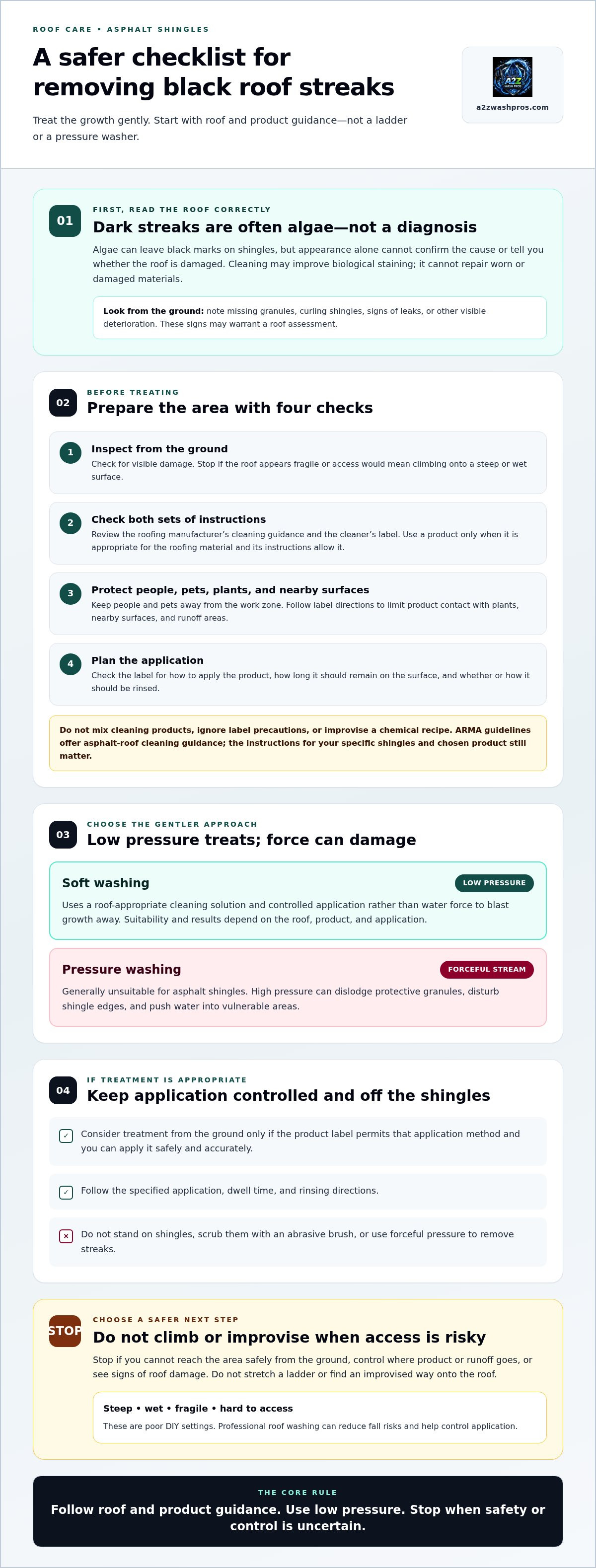
Before choosing a cleaner, use this checklist:
- Inspect from the ground. Look for missing or curling shingles, signs of leaks, and other visible damage. Stop if the roof appears fragile or if access would require climbing onto a steep or wet surface.
- Check the instructions first. Review the roofing manufacturer’s cleaning guidance and the cleaner’s label. Use a product only if it’s appropriate for the roofing material and its instructions allow it.
- Protect the area. Keep people and pets away from the work zone. Follow label directions to limit product contact with plants, nearby surfaces, and runoff areas.
- Plan the application. Check the label for instructions on application, how long the product should remain on the surface, and whether or how it should be rinsed.
Never mix cleaning products or ignore label precautions. The Asphalt Roofing Manufacturers Association (ARMA) guidelines offer asphalt-roof cleaning guidance, but the instructions for your specific shingles and chosen product still matter. Don’t improvise a chemical recipe or assume a cleaner is suitable because it’s used on another roof.
Apply a Roof-Safe Cleaning Method Without Climbing
Consider treatment from the ground only if the product label permits that application method and you can apply it safely and accurately. Follow the specified application, dwell time, and rinsing directions. Don’t stand on shingles, scrub them with an abrasive brush, or use forceful pressure to remove streaks. High-pressure water can dislodge protective granules and damage shingles.
If you can’t reach the affected area safely from the ground, control where the product or runoff goes, or see signs of roof damage, stop. Don’t stretch a ladder or improvise a way onto the roof. Professional roof washing is a safer option when access or application is difficult. A2Z Wash Pros roof washing serves residential and commercial properties in Houston, Katy, Hitchcock, and the broader Galveston County area.
Soft Washing vs. Pressure Washing: Which Protects Roof Shingles?
For asphalt shingles, forceful pressure is the wrong tool for removing algae. A pressure washer can dislodge protective granules, disturb shingle edges, and push water into vulnerable areas. Soft washing uses low-pressure application with a cleaning solution instead of relying on water force to blast growth away. Neither approach suits every roof in every condition, so consider the roofing material, its condition, manufacturer guidance, and product instructions.
Soft washing: Applies a roof-appropriate cleaner at low pressure. It relies on the product and controlled application to address growth, not forceful impact. Suitability and results depend on the roof, product, and application.
Pressure washing: Directs a stronger stream at the surface. That force can disturb shingle granules and edges, making pressure washing generally unsuitable for asphalt shingles. It also requires control to avoid directing water beneath the roofing material.
Why High Pressure Can Harm Shingles
Shingle granules help protect the roofing surface. A concentrated water stream can loosen them or catch exposed edges, especially where shingles are worn or already damaged. Stronger pressure doesn’t mean safer or more complete cleaning. It may remove visible growth while also harming the surface underneath. The Asphalt Roofing Manufacturers Association (ARMA) guidelines advise against pressure washing asphalt shingles. Consider roof condition and manufacturer instructions before selecting a cleaning approach.
What Roof Soft Washing Does, and Does Not, Mean
Soft washing means applying a roof-appropriate cleaning solution with low pressure rather than blasting shingles with a pressure washer. It isn’t risk-free: product choice, application, dwell time, and runoff control still matter. Follow the cleaner label and roofing manufacturer’s guidance. If you’re deciding how to remove black streaks from roof shingles, don’t assume a method is safe just because it’s called a soft wash. Suitability depends on the roof and how the treatment is handled.
The practical choice is clear: avoid forceful pressure on asphalt shingles, and don’t treat soft washing as a universal fix. If the roof is fragile, difficult to access, or the application and runoff can’t be controlled safely, leave the work to professional roof washing.
What to Do After Cleaning, and How to Limit Returning Streaks
Don’t judge the result too quickly. Depending on the roof, cleaning product, and application, stains may fade gradually rather than disappear at once. Some discoloration may remain. Avoid repeating treatment or adding another product unless the manufacturer’s guidance and product label allow it. More cleaning isn’t automatically better, especially if the shingles are worn or the cause of the marks is uncertain.
Reduce Conditions That Encourage Repeat Growth
After wet weather, observe shaded roof sections from the ground. Note areas that stay damp, overhanging branches, and places where water appears to drain poorly. Trim nearby vegetation only when it can be done safely and appropriately. Don’t climb onto the roof or reach from an unstable ladder. Keep gutters and downspouts clear as part of routine property care. Clear gutters support general roof drainage, but they don’t guarantee that algae streaks won’t return.
If you’re considering how to remove black streaks from roof shingles again, start by observing what has changed rather than applying an unapproved treatment. Look for recurring discoloration from a safe vantage point and follow the roof manufacturer’s guidance before planning further cleaning. Recurrence can depend on shade, moisture, roof condition, and other site-specific factors, so there’s no single schedule for every home.
Know When Cleaning Is Not the Right Next Step
Arrange a roofing assessment if you notice leaks, missing granules, loose or curling shingles, or visible deterioration. Streaks alone don’t confirm roof damage, but these signs may indicate a problem that washing can’t solve. Don’t treat a leak or damaged shingle as a cleaning issue, and don’t climb up to investigate. Roof washing can improve surface appearance, but it doesn’t replace inspection, repair, or replacement when roofing materials are compromised.
Base future attention on what you can safely observe rather than a fixed cleaning interval. If streaks return and the roof is difficult to access or shows signs of wear, professional roof washing can address the surface while keeping the roof’s condition in view. For help with roof washing, request a roof washing estimate.
When Professional Roof Washing Is the Safer Choice
DIY roof cleaning stops being a reasonable option when reaching the shingles puts you at risk. Steep, wet, fragile, or difficult-to-access roofs are poor settings for homeowner treatment. A ladder can shift, shingles can be slippery, and even careful application may be hard to control from the ground. The goal isn’t simply to finish cleaning. It’s to protect people and the roof.
Signs It Is Time to Stop DIY Roof Cleaning
Stop if cleaning would require walking on shingles, balancing on a ladder, or reaching over a roof edge. Don’t proceed if you see damage, the cleaner’s directions are unclear, or you can’t manage where the solution and runoff will go. These are practical safety limits, not challenges to overcome with improvised equipment. Safety takes priority over completing the task.
Professional roof washing can reduce your exposure to falls and help avoid uncontrolled product application. It’s especially worth considering when the roof’s condition or layout makes safe access difficult. If you’ve been researching how to remove black streaks from roof shingles but can’t meet the safety requirements, leave the work to a professional.
Local Roof Washing for Houston, Katy, and Galveston County
A2Z Wash Pros is a veteran-owned company offering roof washing for residential and commercial properties in Houston, Katy, Hitchcock, and the broader Galveston County area. Roof washing calls for care around roofing materials, the home, and the surrounding property. The approach should account for the roof’s condition and access rather than treating every roof the same way.
Choose professional help when you can’t safely reach or treat the affected areas yourself. A2Z Wash Pros provides free estimates for roof washing, with attention to careful application and property protection. Request a free roof-washing estimate.
Protect Your Roof With a Careful Next Step
Black streaks are often algae staining, not proof that shingles are failing. Missing granules, leaks, or visible deterioration call for a roof assessment, not another round of cleaning. If you choose DIY, follow the roof manufacturer’s guidance and cleaner label. Avoid forceful pressure, and don’t risk climbing onto a steep, wet, or fragile roof.
Knowing how to remove black streaks from roof shingles safely also means knowing when to stop. A2Z Wash Pros is a veteran-owned and operated company offering roof washing for residential and commercial properties in Houston, Katy, Hitchcock, and the broader Galveston County area. Get a free estimate to discuss a careful approach for your property.
Request a free roof-washing estimate. Take a careful next step to address the streaks while keeping roof and personal safety in focus.
Frequently Asked Questions
Can I remove black streaks from my roof with a pressure washer?
No. A pressure washer can dislodge protective granules, disturb shingle edges, or force water beneath roofing materials. Stronger pressure doesn’t make roof cleaning safer or more complete. Avoid pressure washing asphalt shingles and review the roofing manufacturer’s cleaning guidance before any treatment. If the roof is steep, wet, fragile, or hard to access, don’t attempt the work yourself.
How do you remove black algae streaks from roof shingles safely?
To learn how to remove black streaks from roof shingles safely, begin by checking the roof manufacturer’s cleaning guidance and the cleaner’s label. Use only a product appropriate for the roofing material, and follow its application, dwell-time, and rinsing directions. Protect people, pets, nearby surfaces, and plants from contact and runoff. Don’t mix cleaners, scrub shingles abrasively, or climb onto a steep or wet roof.
Will black streaks damage my roof?
Black streaks don’t automatically mean your roof is failing. Algae staining is often a surface issue, but growth may hold moisture against shingles over time. Appearance alone can’t establish the roof’s condition. Watch for warning signs such as missing granules, curling or loose shingles, visible deterioration, or leaks. Cleaning can address staining, but it won’t repair roofing materials. If you notice damage, arrange a roof assessment rather than simply washing the area.
Does soft washing remove black streaks from a roof?
Soft washing can address algae staining with low-pressure application rather than forceful water. Results vary with the roof’s condition, cleaning product, and application, so stains may not disappear immediately or completely. Soft washing isn’t automatically suitable for every roof. Follow the cleaner label and manufacturer guidance, and account for runoff. If you can’t safely control application or access, professional roof washing may be the safer choice.
How can I keep black streaks from coming back?
You can reduce some conditions that support growth, but no basic maintenance step guarantees streak prevention. Observe shaded or damp roof areas from the ground, especially after wet weather. Keep gutters and downspouts clear to support drainage, and trim nearby vegetation only when it can be done safely. Avoid applying unapproved treatments or climbing onto shingles. Monitor the roof over time, and base future cleaning decisions on observed conditions.
Is it safe to clean a roof myself?
DIY roof cleaning may be unsafe if it requires walking on shingles, balancing on a ladder, or reaching over an edge. Wet, steep, fragile, or difficult-to-access roofs are poor settings for homeowner cleaning. Stop if you see damage, can’t follow the cleaner’s instructions, or can’t control runoff. A2Z Wash Pros provides roof washing for homes and businesses in Houston, Katy, Hitchcock, and the broader Galveston County area.


