
The strongest stream isn’t always the safest way to clean a roof. If you’re weighing soft wash vs pressure wash roof cleaning, the key question is how to remove grime while protecting the roofing material.
That concern is justified. High pressure can strip protective granules from asphalt shingles, while tile, metal, and other roof materials each have their own cleaning considerations. Houston’s humid conditions can encourage organic growth and dark staining, so the right approach needs to balance appearance with care for the roof.
This guide explains how soft washing and pressure washing work, how roofing materials and existing wear affect the choice, and why force alone shouldn’t determine the method. You’ll also learn what to consider when stains or roof condition call for a careful approach, and what a professional cleaning process should prioritize. A2Z Wash Pros treats roof washing as surface-specific work, with precision and property protection at the center.
Key Takeaways
- The safer choice in a soft wash vs pressure wash roof comparison depends on roofing material, condition, and the force used.
- Match the cleaning method to the specific roof material, and follow verified manufacturer care instructions.
- Use roof age, stains, and surface condition to guide the cleaning approach instead of assuming every Houston-area roof needs the same treatment.
- A careful roof-washing process starts with inspection and material identification, then protects nearby surfaces and manages runoff.
- A2Z Wash Pros brings a protection-first approach to residential roof washing across Houston, Katy, Hitchcock, and Galveston County.
Soft Wash vs. Pressure Wash Roof: What Homeowners Need to Know
The right roof-cleaning method depends on the approach, the force used, the roofing material, and the roof’s current condition. Soft washing is generally the lower-force option for roofs with organic staining, but the name alone doesn’t determine whether a method is appropriate. A sound roof and a worn or damaged roof may not respond the same way to cleaning.
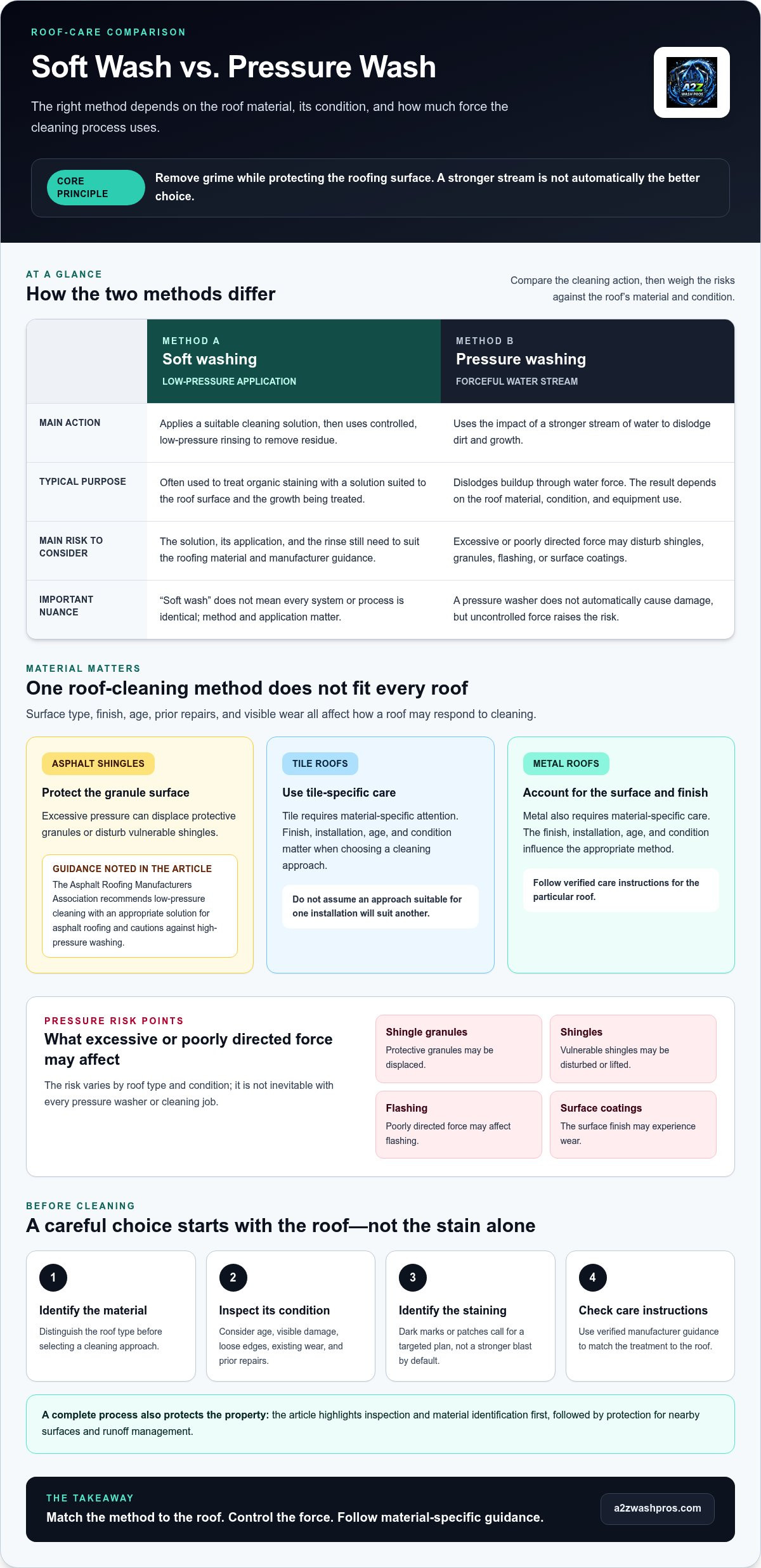
In a soft wash vs pressure wash roof comparison, the main difference is how the grime is removed. Soft washing uses a suitable cleaning solution and controlled rinsing. Pressure washing relies more on the impact of water. The right decision controls force and matches the treatment to the roof.
What is soft washing a roof?
Soft washing means applying a suitable cleaning solution at low pressure, allowing it to target organic staining, then rinsing in a controlled manner. Equipment and application can vary, so “soft wash” doesn’t mean every system or process is identical. The cleaning solution should suit both the roof surface and the type of growth being treated.
Soft washing treats organic staining with a suitable solution, then removes residue with controlled, low-pressure rinsing. That differs from using a forceful water stream as the main cleaning tool. For background on common roof cleaning methods, including concerns about pressure washing asphalt shingles, see this general overview of roof-cleaning approaches.
What does pressure washing do to a roof?
Pressure washing directs a stronger stream of water at the surface to dislodge dirt and growth. On vulnerable roofing, too much force or an unsuitable spray angle can disturb asphalt-shingle granules, lift shingles, affect flashing, or wear surface coatings. The outcome depends on the material, its condition, and how the equipment is used. A pressure washer doesn’t automatically cause damage, but uncontrolled force raises the risk.
Roof materials aren’t interchangeable. A surface that tolerates a particular cleaning approach may respond differently from an aging shingle roof or a roof with loose edges and existing wear. Before cleaning, identify the material and assess its visible condition. If the surface is already compromised, aggressive rinsing can worsen weak points instead of simply removing stains.
Houston’s humid conditions can support organic growth that contributes to roof staining. Identify what’s on the roof before choosing how to remove it. Black streaks or patches call for a targeted plan, not a stronger blast by default. The goal is effective roof washing with measured force, attention to the surface, and a process that avoids trading a cleaner appearance for preventable wear.
How Soft Washing and Pressure Washing Affect Different Roof Materials
The same cleaning method won’t suit every roof. Asphalt shingles, tile, and metal differ in surface texture and finish. Age, prior repairs, and existing wear can also affect how much cleaning force a roof can tolerate. Use the manufacturer’s care instructions as your reference, then match the method to the material and its condition.
| Method | Force and typical purpose | Risk considerations |
|---|---|---|
| Soft washing | Uses a suitable cleaning solution with low-pressure application and controlled rinsing. Often used to treat organic staining. | Solution choice, application, and rinsing still need to suit the roofing material and manufacturer guidance. |
| Pressure washing | Uses a forceful water stream to dislodge buildup from a surface. | Excessive or poorly directed force may disturb shingles, granules, flashing, or surface coatings. Risk varies by roof type and condition. |
Are shingles, tile, and metal roofs cleaned the same way?
No. Asphalt shingles have surface granules that excessive pressure can displace. The Asphalt Roofing Manufacturers Association guidelines recommend low-pressure cleaning with an appropriate solution for asphalt roofing and caution against high-pressure washing. Tile and metal roofs also require material-specific care. Their finish, installation, age, and condition matter. Don’t assume one method is safe for every tile or metal roof, or that an approach suitable for one installation will suit another.
Visible staining doesn’t reveal the whole story. A dark mark may point to organic growth, but it can’t show whether shingles are loose, a tile is cracked, a coating is worn, or a prior repair has left a vulnerable area. Cleaning should follow an inspection, not just the appearance of the roof from the ground.
Can pressure washing damage roof shingles?
Yes. Excessive or poorly directed pressure can displace protective granules or disturb vulnerable shingles. That’s a risk, not an inevitable result of every pressure washer or cleaning job. On shingle roofs, controlling water force helps protect the granule surface and reduce the chance of disturbing shingles.
An aging roof, visible damage, or repaired sections call for particular care before cleaning begins. The same is true when stains conceal the surface beneath them. Identify the roof material, assess its condition, and follow verified manufacturer instructions before selecting a treatment. For a material-aware approach to professional roof washing, A2Z Wash Pros prioritizes precision and property protection.
Which Roof-Cleaning Method Fits Houston-Area Homes?
There’s no single cleaning choice for every roof in Houston, Katy, Hitchcock, or Galveston County. Local conditions matter, but they don’t mean homes share the same roofing materials, exposure, or stain patterns. Choose the method based on the roof in front of you, not a citywide assumption.
Use this decision sequence:
- Identify the material. Asphalt shingles, tile, and metal have different surfaces and care requirements.
- Consider age and condition. Aging materials, loose pieces, visible damage, or prior repairs call for closer assessment before cleaning.
- Look at the stain. Its location and appearance can help guide treatment, but staining alone can’t show the condition of the roofing underneath.
- Follow manufacturer care instructions. For asphalt shingles, the Asphalt Roofing Manufacturers Association (ARMA) guidelines address algae cleaning and caution against high-pressure washing. Check the instructions for the specific roofing product.
That’s the practical answer to soft wash vs pressure wash roof: let the roof’s material, condition, and cleaning needs determine the approach. Don’t choose a method based only on what removes visible stains fastest.
How roof condition changes the cleaning decision
A roof with loose shingles, cracked tiles, worn coatings, or patched sections shouldn’t be treated like a uniform, undamaged surface. Stains may conceal details that matter, and a view from the ground won’t necessarily reveal every weak point. A careful assessment helps identify vulnerable areas before cleaning begins.
Warranty terms can differ by roofing product and manufacturer. Follow the applicable care instructions rather than assuming a method will preserve or void coverage. If the roof has a known repair or signs of wear, its condition should shape the cleaning plan and the force used.
What Houston homeowners should consider
Warm, humid Houston-area weather can encourage algae growth, but local conditions vary from property to property. Tree cover and shade may keep some roof sections damp longer. Roof orientation can affect how sunlight reaches different slopes, while drainage patterns may influence where moisture or debris collects. These are useful observations, not proof of the roof’s condition or a guarantee that a particular stain has one cause.
A roof in Houston may have different shade and drainage patterns from one in Katy, Hitchcock, or elsewhere in Galveston County. A material-aware inspection helps turn those site details into a measured cleaning choice. For Houston-area roof washing, A2Z Wash Pros emphasizes precision and property protection, with the method suited to the surface rather than applied indiscriminately.
Roof-Washing Safety Checklist: What Should Happen Before Cleaning?
A careful roof wash starts before any solution or rinse reaches the surface. Preparation helps identify vulnerable areas, match the cleaning method to the roof, and protect the property below. Use this sequence as a guide to what a professional process should prioritize.
- Inspect the roof. Look for visible damage, loose materials, worn areas, and prior repairs. Washing removes buildup, not roofing defects.
- Identify the material. Note whether the roof is shingle, tile, metal, or another surface, then follow the applicable manufacturer care instructions.
- Protect the surroundings. Consider nearby plants, exterior walls, windows, outdoor items, and the paths water may follow.
- Select the method. Base the choice on roof type, condition, and staining. For the soft wash vs pressure wash roof decision, controlled force matters as much as the cleaning approach.
- Plan for runoff and access. Consider drainage paths and keep people clear of the work area. Avoid unsafe roof access. A homeowner shouldn’t climb onto a roof to inspect or prepare it.
What should a roof-washing assessment include?
An assessment should consider visible roof condition, roofing material, access, nearby landscaping, and drainage. Existing cracks, loose shingles or tiles, aging sections, and previous repairs deserve attention before cleaning begins. Stains can obscure the surface, so their coverage alone can’t establish whether the roof beneath them is sound.
This inspection helps shape a controlled, project-specific approach instead of applying the same treatment to every roof. It also keeps expectations clear: washing can address surface buildup, but it isn’t a repair for damage or a substitute for evaluating a roofing problem.
How should property and runoff be protected?
Before work begins, consider what’s around the house and where rinse water may travel. Nearby plants, exterior surfaces, drainage routes, and access areas all factor into the setup. Cleaning solutions should suit the roof surface and staining, then be handled and applied according to product directions. Manage runoff responsibly and take care to avoid unnecessary contact with surrounding property.
Good preparation protects the roof, the work area, and the property around it. It’s a practical part of precision, not an afterthought. A2Z Wash Pros provides roof washing with attention to surface-specific cleaning and property protection. Plan professional roof washing with a careful process from inspection through cleanup.
Choosing Roof Washing in Houston: A2Z Wash Pros' Protection-First Approach
The choice isn’t simply soft wash or pressure wash. A considered approach starts with the roof itself: its material, visible condition, and the buildup to be cleaned. Controlled force and surface-specific care matter more than blasting away stains as quickly as possible.
A2Z Wash Pros is a veteran-owned Houston-area company offering residential roof washing. Founded in 2018 and backed by more than ten years of industry experience, the company puts precision, property protection, and reliable service at the center of its work. Roof washing calls for attention to the surface, not a one-setting solution for every home.
What to expect from a protection-first roof-washing service
A thoughtful cleaning approach accounts for the roof’s material and observed condition before work begins. Asphalt shingles, tile, and metal have different surface characteristics. Aging, previous repairs, and visible wear can also affect how a roof should be handled. A method that ignores those differences may expose vulnerable areas to unnecessary force.
Precision means matching the cleaning approach to the surface and the staining while considering the property around it. No cleaning method can promise a particular warranty outcome, and roof washing isn’t a repair for damaged materials. Applicable manufacturer care instructions should guide the decision.
Get a roof-washing estimate in the Houston area
A2Z Wash Pros serves homeowners in Houston, Katy, Hitchcock, and the broader Galveston County area. Each property has its own roof material, exposure, and cleaning needs, so sharing those details helps frame the estimate. When requesting one, describe the type of roof, where stains appear, and any visible wear or past repairs.
For homeowners still weighing soft wash vs pressure wash roof options, the practical priority is clear: choose roof washing that respects the surface and controls force. A2Z Wash Pros offers free estimates for roof washing across its Houston-area service region. Request a free roof-washing estimate and share what you’ve noticed on your roof.
Protect Your Roof With a Method That Fits
The safest choice in a soft wash vs pressure wash roof decision depends on the roof’s material and condition, not just the visible stains. Soft washing uses a suitable solution and controlled rinsing; excessive or poorly directed pressure can put vulnerable surfaces at risk. Check manufacturer care instructions and make roof condition part of the cleaning decision.
Preparation matters, too. A careful process considers existing wear, nearby surfaces, and runoff before cleaning starts. That attention keeps the work focused on the roof and the property around it.
A2Z Wash Pros is veteran-owned and operated by Nolan Ginn III, providing roof washing across Houston, Katy, Hitchcock, and the broader Galveston County area. Request a free roof-washing estimate and share what you’ve noticed about your roof. Take the next step with a protection-first approach to caring for your home.
Frequently Asked Questions
Is soft washing safer than pressure washing a roof?
Soft washing is generally the lower-force choice for roofs, especially asphalt shingles, but no method is automatically safe for every roof. The right approach depends on the roofing material, its condition, and the cleaning solution and application. The Asphalt Roofing Manufacturers Association recommends low-pressure cleaning for asphalt roofing. Follow the care instructions for your specific roof, and consider visible wear or prior repairs before cleaning begins.
What is the difference between soft washing and pressure washing a roof?
Soft washing applies a suitable cleaning solution at low pressure, then rinses in a controlled way. Pressure washing depends more on the force of the water stream to dislodge buildup. In a soft wash vs pressure wash roof decision, the distinction is how cleaning happens, not simply which machine is used. Match the method to the roof material, staining, and condition instead of choosing based on speed alone.
Can you soft wash a tile or metal roof?
Tile and metal roofs can be cleaned with a low-pressure approach when the method and solution suit the specific material and installation. That doesn’t mean every tile or metal roof should receive the same treatment. Surface finish, age, damage, prior repairs, and manufacturer instructions all matter. An assessment should guide the approach, especially if tiles are cracked, coatings are worn, or parts of the roof have been repaired.
Does soft washing remove black streaks from a roof?
Soft washing can treat organic staining that causes black streaks on many asphalt-shingle roofs. In humid areas such as Houston, these streaks are commonly associated with the algae Gloeocapsa magma, which feeds on limestone filler in asphalt shingles. The cleaning approach should match the roof material and follow its care instructions. Stains alone don’t reveal whether shingles are worn or damaged, so appearance isn’t a substitute for assessing the roof.
Can roof washing void a roof warranty?
Roof washing doesn’t automatically void every warranty, but an unsuitable cleaning method may create problems. The Asphalt Roofing Manufacturers Association cautions against high-pressure washing asphalt shingles and recommends low-pressure cleaning with an appropriate solution. Warranty terms vary by product and manufacturer, so read the instructions that apply to your roof. Don’t assume a cleaning method guarantees warranty protection or automatically cancels coverage. Follow the specific care requirements.
How often should a roof be professionally cleaned in Houston?
There isn’t one cleaning schedule for every Houston roof. Warm, humid conditions can support algae growth, and some roofs may need professional cleaning every two to three years, but that’s not a fixed rule. Shading, tree cover, drainage, roof material, and the amount of visible growth can affect timing. Base the decision on the roof’s condition and manufacturer care guidance rather than cleaning by calendar alone.


